Aberdeenshire Walks, Places to Walk

Kirk of Skulls & Coastal Circular, Gardenstown

Distance: 5 miles. Time: 2-3 hrs. Level: Easy, with some elevation. Terrain: A mixture of road, grass track, and well-maintained paths. Access: As you travel along the B9031 from Macduff, you’ll see a signpost for St John’s Church (AB45 3ES) on the left. Shortly after, you’ll find an old quarry on the right, which is the best place to park. The What3words location for the quarry is: ///townhouse.inhabited.note

Please note, there is no direct public transport to the start of this walk. However, you could take the No. 273 bus to Gardenstown and walk to the church from there, although the path may be overgrown in places.

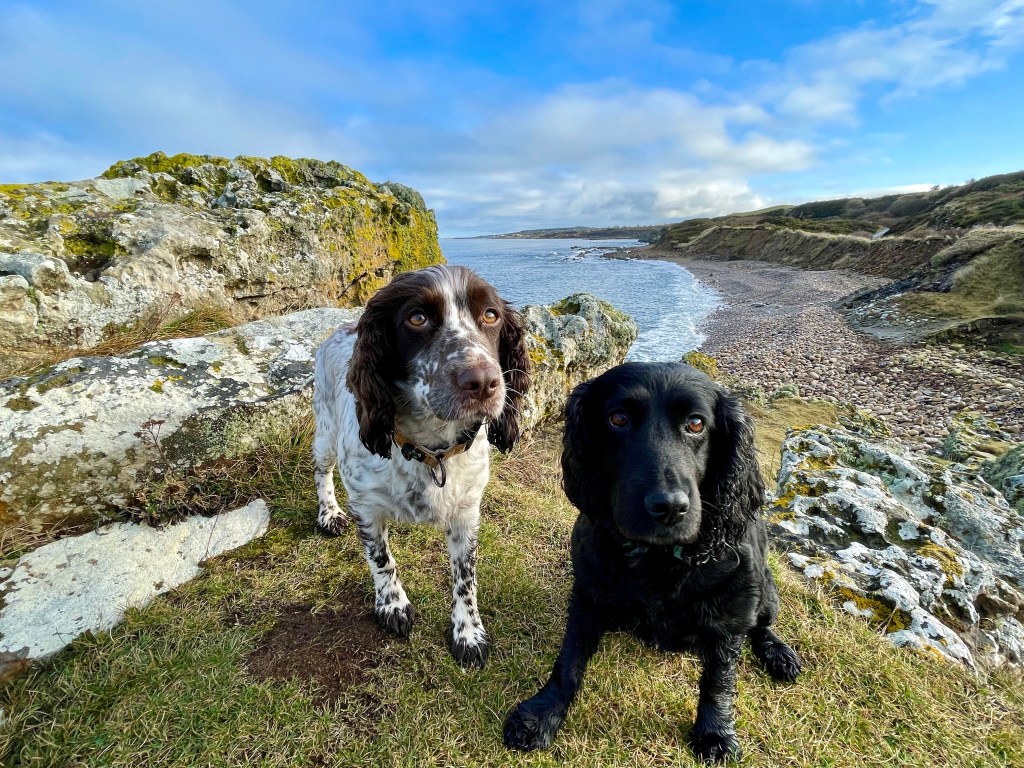
This is a beautiful circular coastal walk with stunning views and a fascinating slice of local history. At its heart lies the atmospheric ruin of St John’s Church, better known as the Kirk of Skulls, perched dramatically above Gamrie Bay.

Start at the old quarry parking area and carefully cross the road to join the small road signposted for St John’s Church. Follow this road as it winds along past the church’s own small carpark. Although you can park here, the rough condition of the access road makes the quarry a better option.

Continue along the track beyond the carpark until you reach the ruined church and graveyard This is St John’s Church, a historic 11th-century site dedicated to St John the Evangelist. Most of the ruins visible today date from the early 1500s, with later additions in the 17th century.
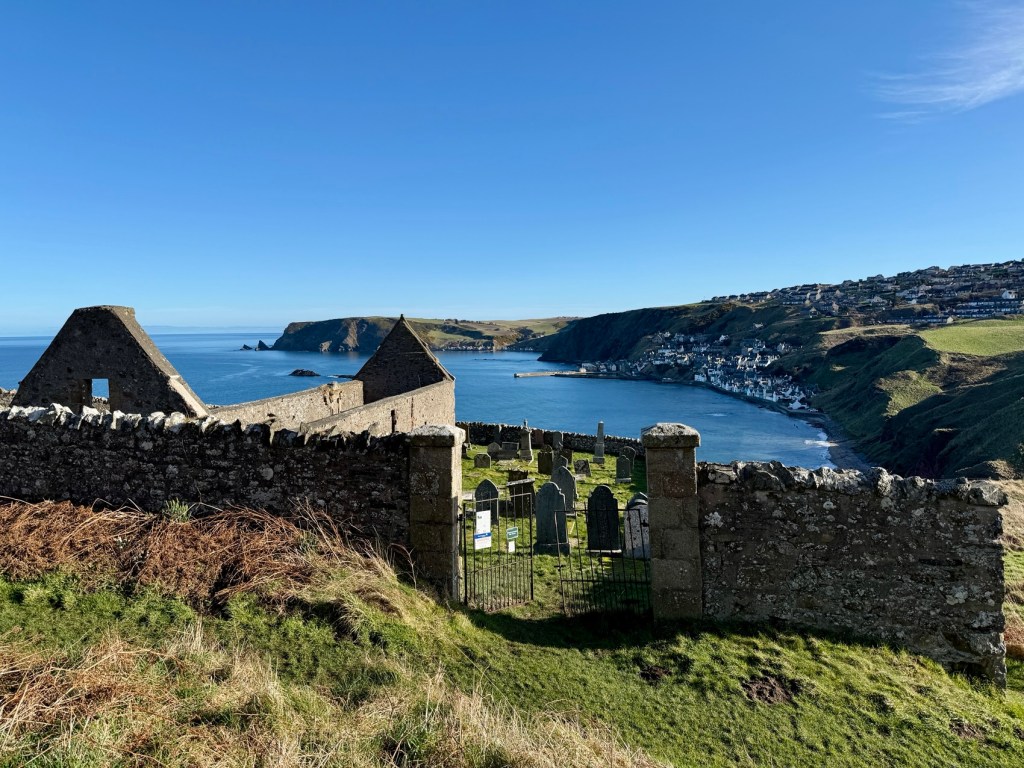
The nickname “Kirk of Skulls” comes from a dramatic local legend linked to a battle in 1004 AD, the Battle of the Bloody Pits. According to tradition, a Viking fleet sought shelter along the Banff coast during a fierce storm. Short on supplies, around 600 Vikings landed near present-day Gardenstown, hoping to raid the area. Unbeknown to them, the Thane of Buchan had anticipated an attack and assembled a strong local force.

A brutal battle followed, ending in the Vikings’ defeat. The heads of three Viking leaders were said to have been displayed within the church until the 19th century, a gruesome detail that inspired the church’s eerie nickname.

After exploring the ruins, continue a short way beyond to a bench with a panoramic view of Gardenstown, locally known as Gamrie. Retrace your steps slightly to the map board, then head up the well-maintained footpath. There is a steady climb here as you make your way inland.
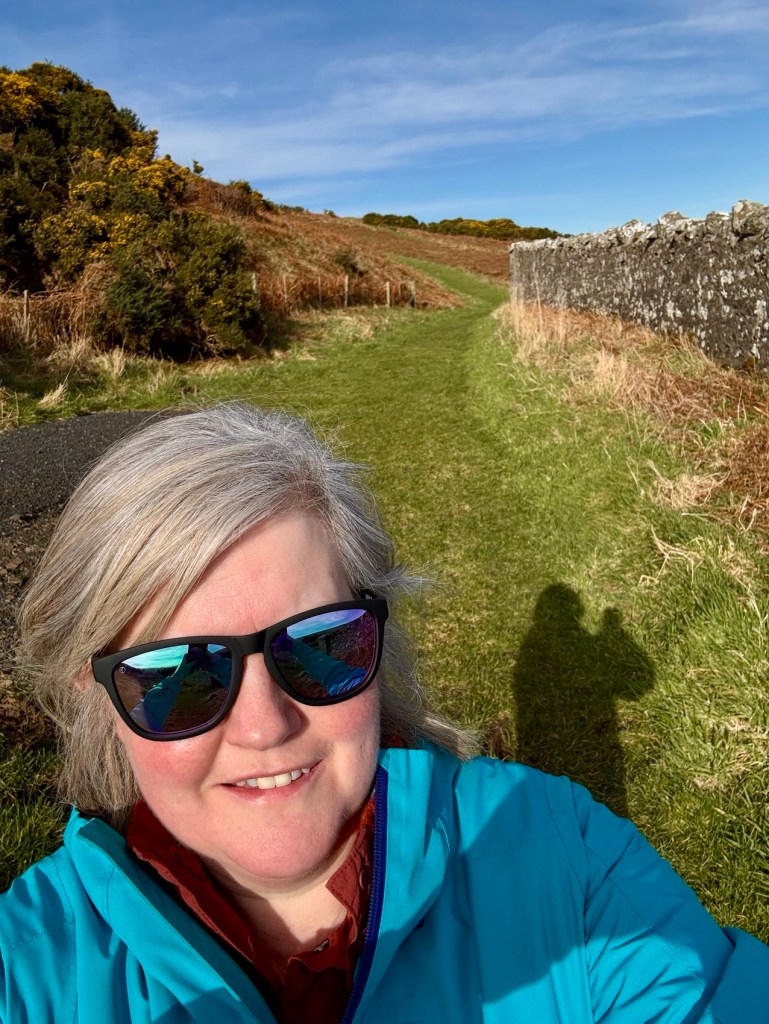
At a junction, take the left-hand path. After passing a farm, continue on the right-hand path, which leads past a row of wind turbines.

Once you reach the coastline, pause to soak in the spectacular views across the Moray Firth. Turn right here to follow the coast back toward Gardenstown, with views of Crovie appearing along this stretch.

Eventually, the path swings back inland. Before you reach the previous junction, take the left turn which leads you back down toward the church. From there, simply follow the road back to the quarry, where your walk ends.

This circular route offers a rich mix of history, coastal beauty, and peaceful rural scenery. It’s an ideal walk for a sunny morning or afternoon, just be sure to bring sturdy footwear and a camera for those views.

Moray Walks, Places to Walk

Cairn Cattoch, Archiestown

Distance: 5 ½ miles, Time: 2 – 2 ½ hours, Level: Easy, Terrain: Forestry track, narrow woodland paths and quiet village walking. Access: Arrive by car parking in the square parking area nearest the hotel AB38 70Q where the walk begins. There is also a M-Connect bus that runs from Elgin to Archiestown Monday to Friday.
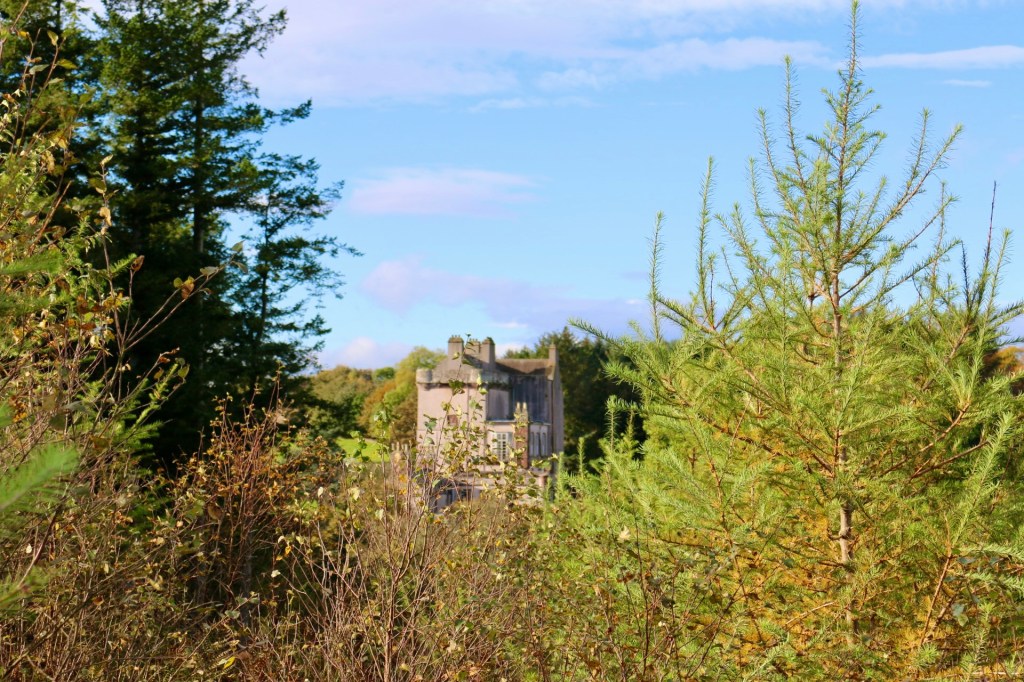
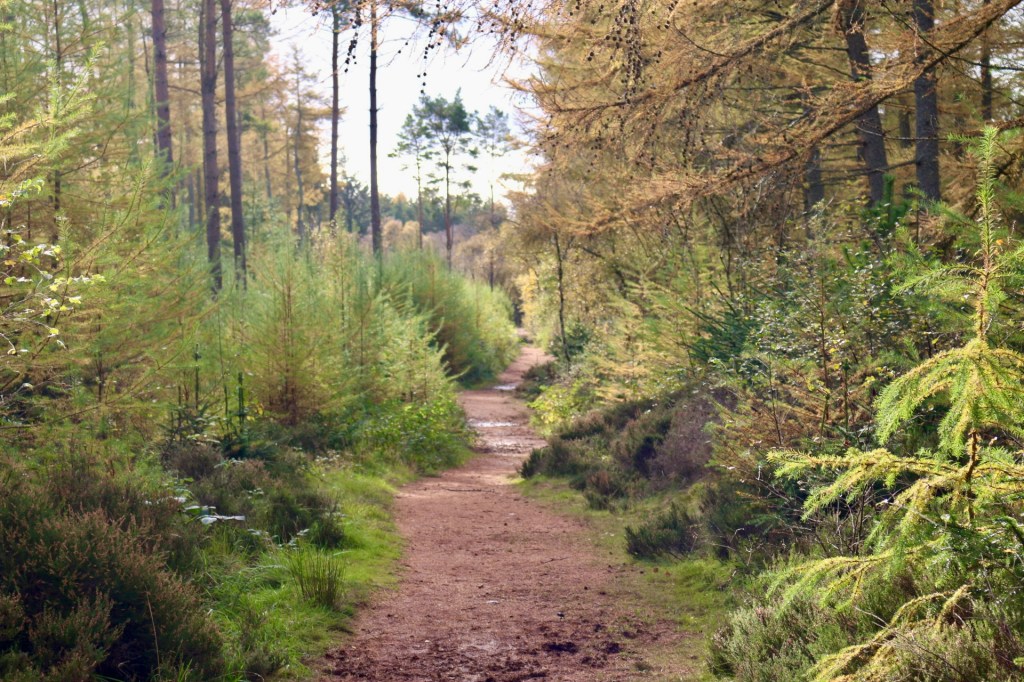
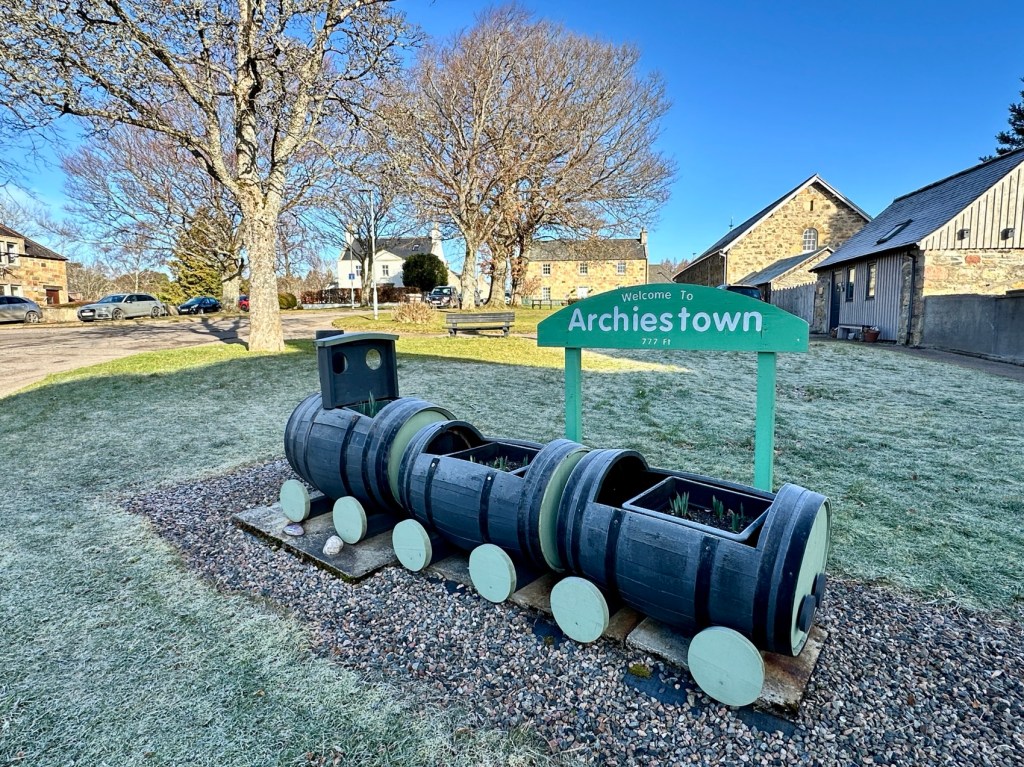
This is a beautiful woodland walk with a gentle hill hike in rural Moray. The walk begins in the village of Archiestown which was founded in 1760 by Sir Archibald Grant of Monymusk. The well kept square has several information boards that are rather interesting reading on the history of this lovely wee village.

After you have explored the square, head up past the war memorial and go straight on. Soon you will leave the village and start heading towards the woods. You will pass one more house to the right hand side before you come to the forestry gate.

At the gate go straight on and you will begin the gentle climb up through the woods on the fantastic track which would also be suitable to cycle and even great for an off-road buggy. Make sure you look back as you are walking uphill as there are some amazing views of Ben Rinnes behind you.

You will pass by a few paths on your left but ignore these and carry straight on. There were plenty of birds in the trees as I was walking,

and I am sure there was plenty of wildlife that was most likely hiding from my dogs. I did have a look for frog’s spawn and other beasties in the ditches at the sides of the paths but unfortunately I didn’t spot any but maybe you will.

After about 1 ½ miles the path will start to curve to the left after another ½ mile there is a slightly rougher track to your right. Head up this track which will shortly take a turn to the right. Carry on until you come to the next junction.

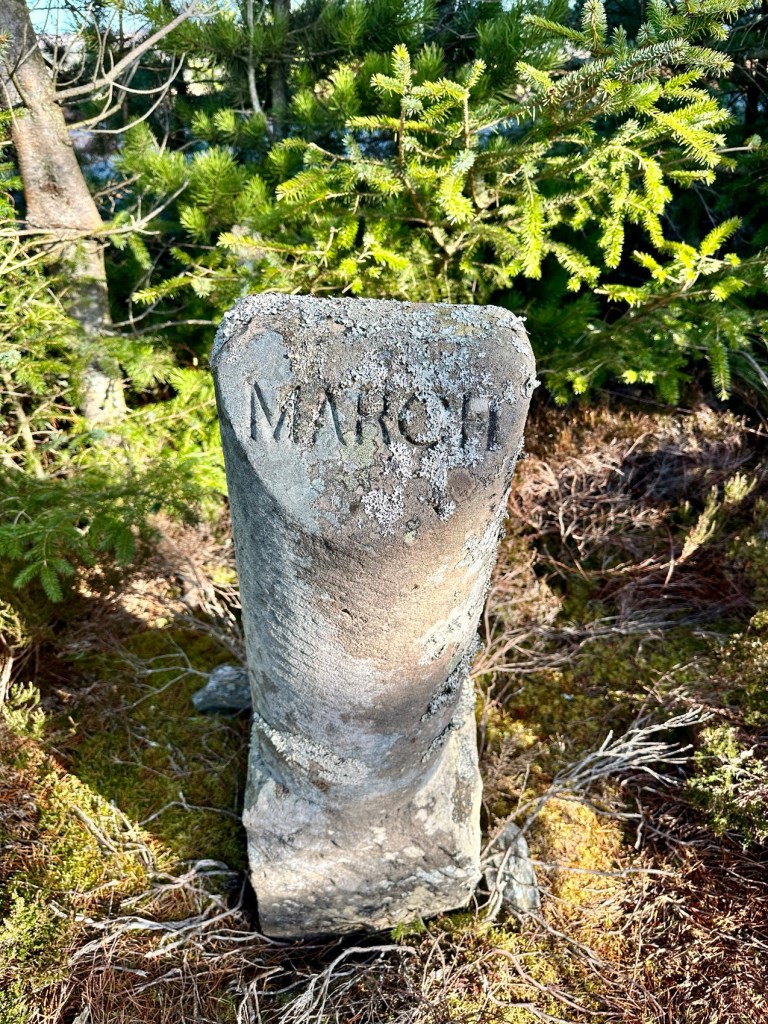
Take the path that turns up to the left that is signposted to Cairn Cattoch, soon you will come to a stone with March carved into it. This stone marks the border between Knockando and Rothes Estates. This is where the Riding of The Marches comes from which was an old custom of a ceremonial procession usually by horseback to make sure the neighbouring estate has not encroached on the owner’s land.

(The next section of the walk is no longer suitable for a buggy or cycle)

At the March stone turn left and follow the very rough narrow track until you reach the summit of Cairn Cattoch where you will find a marker post and another March Stone.

There is a fantastic view of the countryside in front of you and the Cairn Uish wind farm to your left. After you have taken all your photos and had a snack you can retrace your steps until you come back to the Cairn Cattoch sign post.

Take a left here and start your gentle descent back down the hill, keep going until you come to a gate for the quarry.

Take another left here so you can skirt round the side of the quarry and pass by another gate at the opposite end of the quarry. Follow the track until the next junction.

Turn left at the junction and go straight down the track enjoying your final section of your walk in the woods until you return to the gate and shortly after you return back to the village.

Aberdeenshire Walks, Places to Walk

Gardenstown and Crovie Coastal Circuit

Distance: 3 ¾ miles Time: 2hrs Level: Easy with some elevation Terrain: Some road walking, grass path, coastal path and beach. Access: Arrive by car, parking at the Crovie Viewpoint car park AB45 3JQ. Unfortunately, I was unable to find any bus routes for this walk. The coastal path is tidal so please check the tide times before you set off. The coastal path has just recently been clearer after being closed from a landslide. Using the path is at your own risk!

This is a fantastic coastal walk even in the rain, so I discovered anyway as Billy Connelly says there is no such thing as bad weather, just the wrong clothing.

Route : Starting in the carpark you will see an opening to the left towards Gardenstown. Go through the opening and follow the path that takes you along the cliff tops with fantastic views looking back over Crovie and looking on to Gardenstown.

The path eventually takes you to a housing estate on the edge of Gardenstown, go through the gate and take a right and walk along Morven View Road. At the junction take a left on to Garden Crescent, right on to Bracoden Road which then leads you to Gamrie Brae.

Gardenstown was originally called Gamrie and is still known as Gamrie locally. It was founded in 1721 by Alexander Garden as a fishing village.

Just before the bus stop, take the road to the left along Fernie Brae. Follow this road until you reach the row of sheds. Just after the sheds, on the bend you will find a grass path to your left. Follow this path until it passes between two houses and leads you to a T-junction. Take a left here until you reach the next junction.

Head down Denside Lane until you reach the seafront. Take a left here and enjoy a walk along the seafront and on to the beach at the end. You can extend your walk if you want to explore the remains of St John’s Church that you can see high up in the cliffs.

Turning back at the end of the beach and once on the road, pass by the houses and head towards the harbour. At the fork on the road take a left and walk along the side of the harbour. You will find an area with picnic benches which is a great place to stop for a rest and a snack.

Keep going past the harbour until you see the boat mural on the side of the building. Take the opening to the right of the mural then walk through the car park, then take the next left following the sign post to the next carpark. Once you pass all the sheds you will find the sign post for Crovie.

Follow the amazing coastal path that leads you along the bottom of the cliffs until you reach the small 18th century village. On the path you will pass the memorial for those who helped with the rescue of the crew of the SS Vigilant which ran aground here in 1906. Once you reach

Crovie take your time to explore the village, walk to the end of the narrow street and admire the quirky buildings. A major storm destroyed large parts of the village in 1953 so now all that remains is a single row of cottages.

At the pier take a left and you will see an opening on the right beside the boats that are stored nearby. This path is a bit of a hike but is a shortcut to get you back to the carpark. Once off the path just follow up until you reach the carpark and where you first began and the end of the walk.

Moray Walks, Places to Walk

Exploring Elgin

Distance: 3 miles. Time: 1½ – 2hrs. Level: Easy with some elevation, Terrain: Pavement, woodland and grass track. Access: Arrive by car, parking available beside the Elgin Town Hall IV30 1UL (parking £1 for the day). The stagecoach bus station is close to the start of the walk with great bus links throughout the area. 

This is a great walk which is easy to access during the winter months with plenty of notable historical places along the way.

Start the walk from the High Street Fountain on the Plainstones (IV30 1BW). Facing the war memorial head along the High Street.

Passing by the St Giles Church that dominates the High Street with its Greek style pillars. The church was designed by Archibald Simpson and built between 1825 and 1828.

Just behind St Giles Church you will find the Mercat Cross or Muckle Cross. These are found in many towns and cities and are a Scottish name for a market cross where historically the right to hold a regular market or fair has been granted by a monarch, bishop or barron.

Muckle Cross

Keep heading along the High Street until you get to the Muckle Cross pub, here take a left crossing over the road, go towards the Shop-mobility building and take the opening to the left. From here walk through the car park towards the two blocks of flats, here you will find a footbridge over the main road.

Once over the footbridge take a right passing by Grant Lodge and the Elgin Bowling Club heading towards the Cathedral that you will see in front of you.

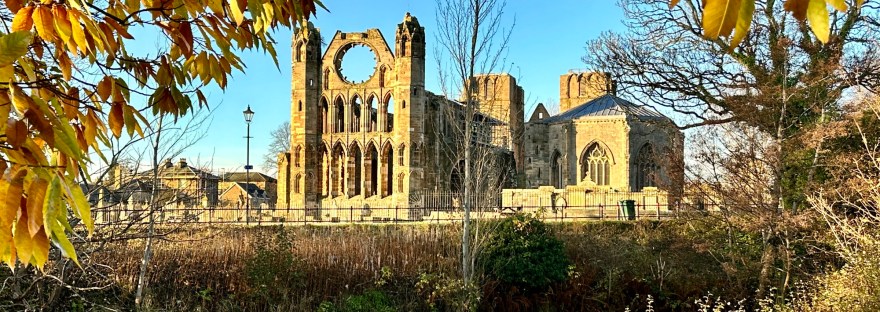
Elgin Cathedral, is also known as the Lantern of the North, dating back to the 13th century. This beautiful building was almost completely destroyed in 1390 by the Wolf of Badenoch, today the Cathedral is open for tours, or you can admire from afar. To the left of the Cathedral, you will find the opening to the Biblical Gardens which is also well worth a visit.

Carry straight on and cross the bridge over the river Lossie, from the bridge take a left and pass by the chip shop heading into Kingsmill Court. You will see a large warehouse on the left, turn left beforethe warehouse in front of you will see a fenced path that runs along the side of the river.

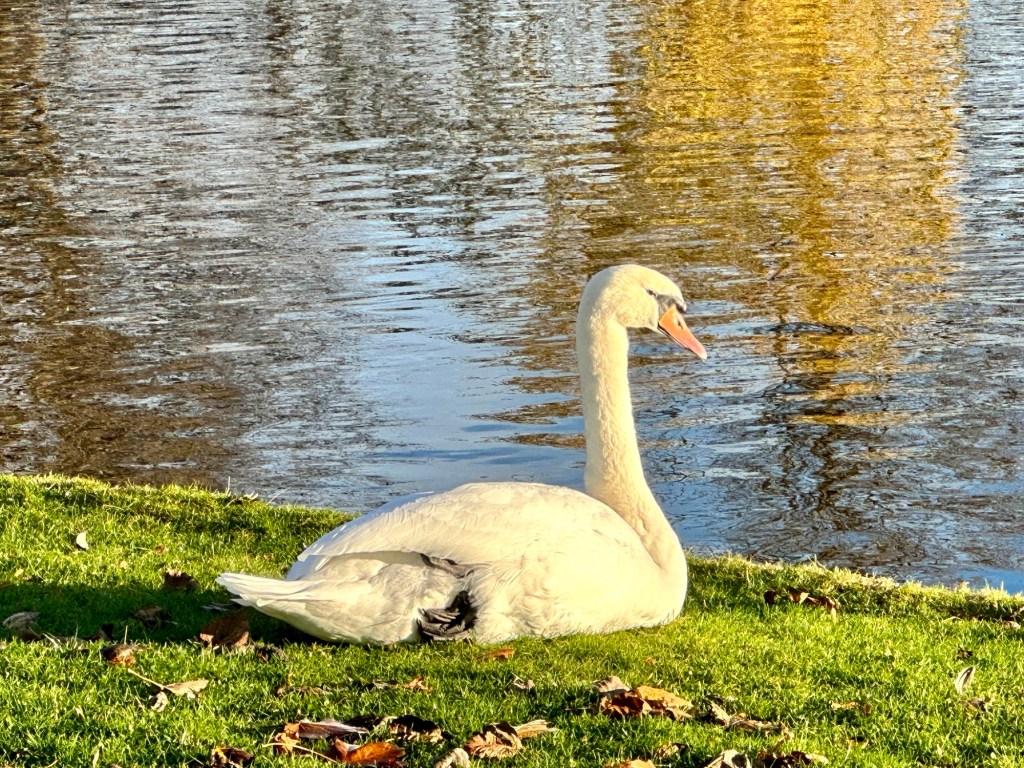
Head along this path until you come to another bridge back over the river. Keep an eye out for wildlife on the river, I saw ducks and heron along the way. Once over the bridge, turn right and follow the path around Cooper Park passing by the Cooper Park pond, there are usually plenty of swans and ducks paddling in the pond.

When you get to the junction of the A941 take the underpass and carry straight on until you pass by the sports centre. Once the path reaches the road, cross over another footbridge to your right. Once over the bridge take a left and just follow the path alongside the river.

Mansion House hotel

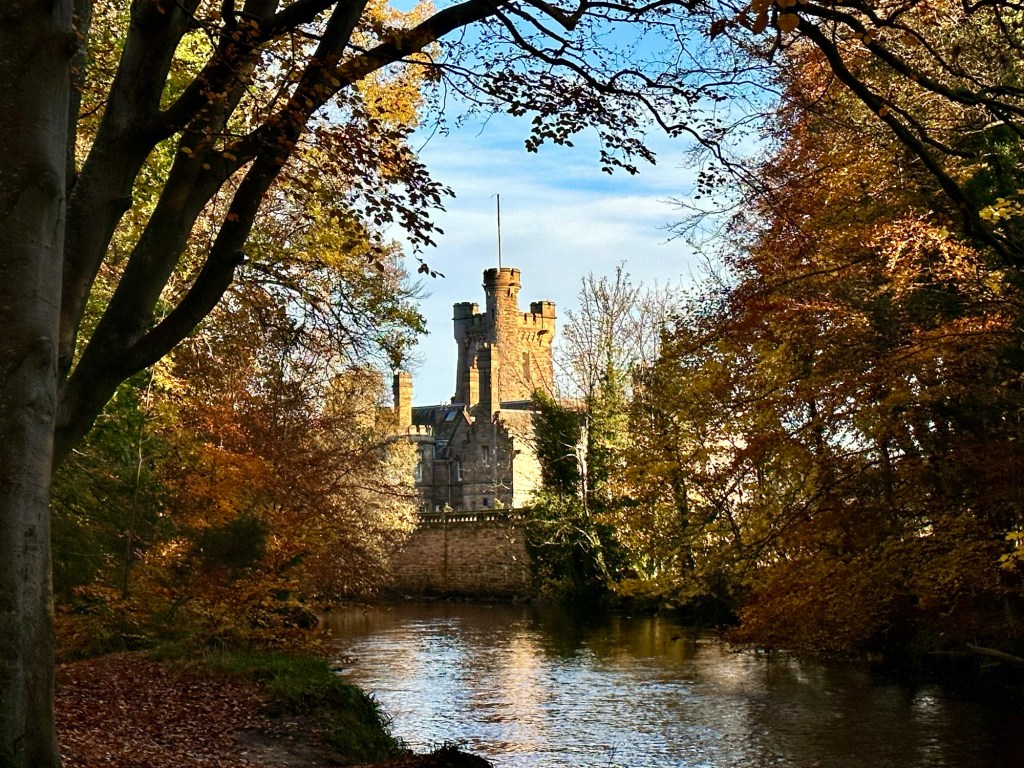
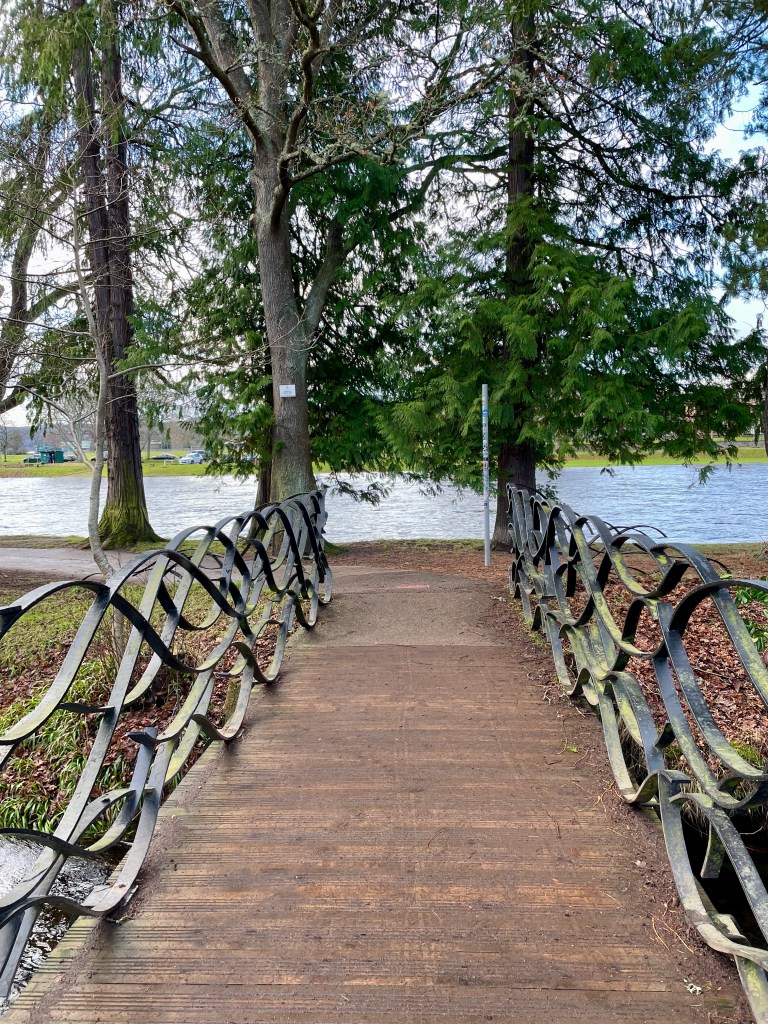
You will get some glimpses of the impressive Mansion House Hotel along the way. You will pass by a closed off footbridge, carry on until you come to the new one. Head over the new bridge and turn left following the path, it will turn right until you eventually come out at a road.

Duke of Gordon Monument

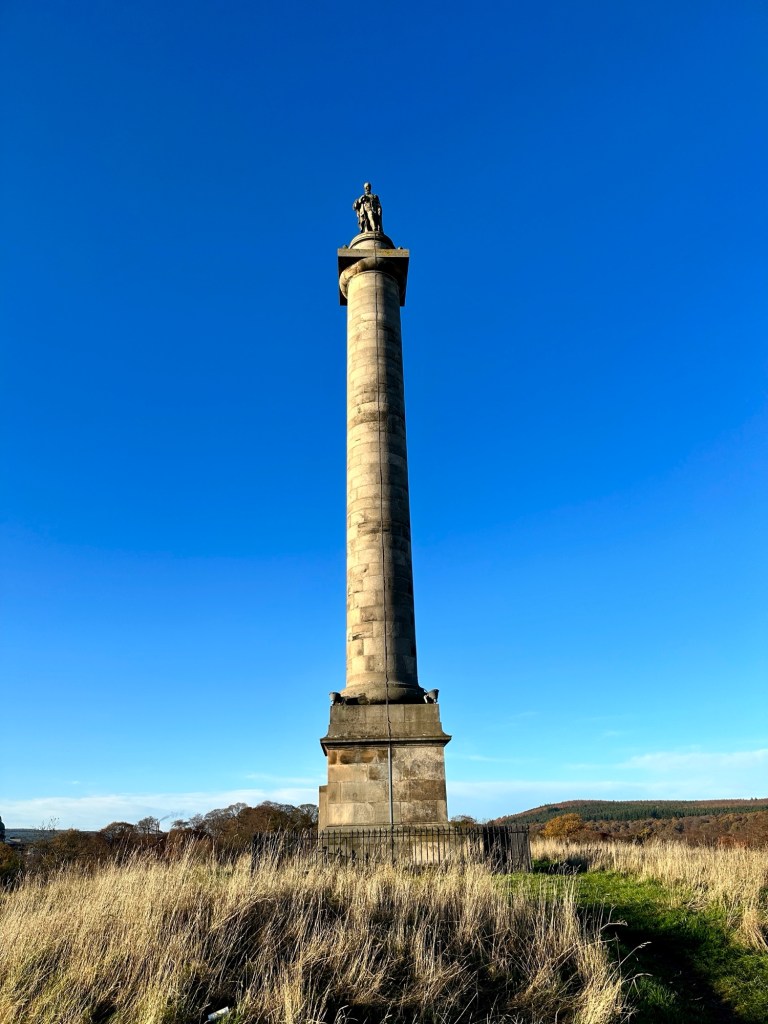
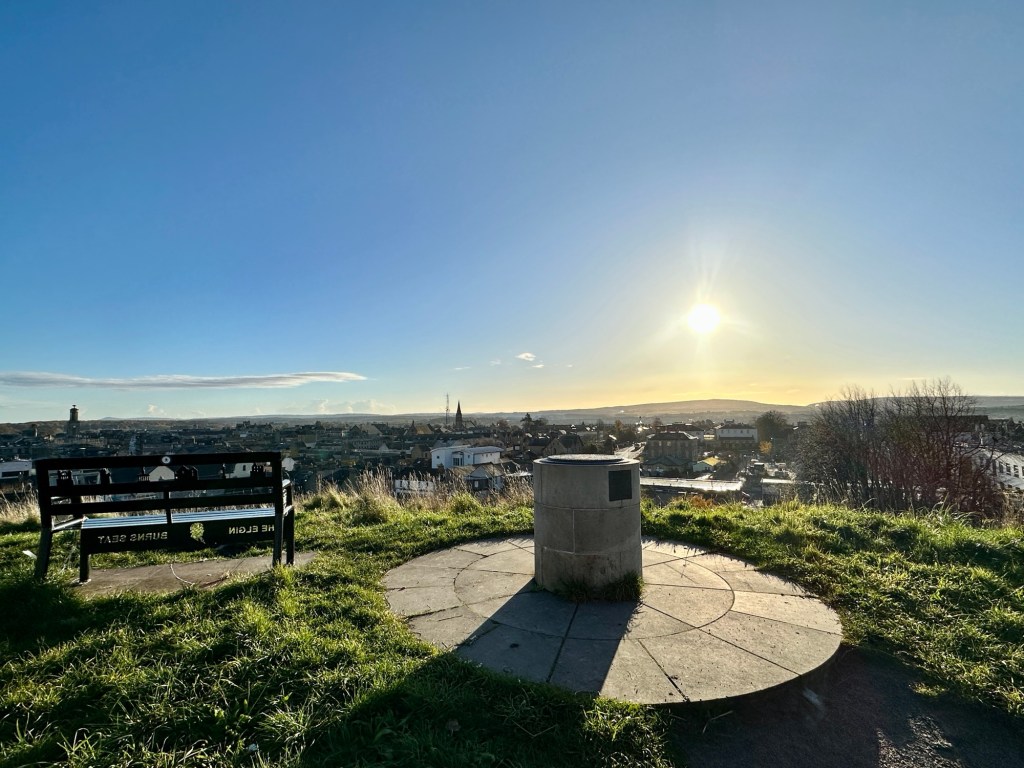
Head along Hill Street once you pass the building with the map you will find the path up Lady Hill. Take the zigzag path until you reach the monument at the top that was built to honour the 5th Duke of Gordon. Next to the monument you will find the remains of Elgin Castle, and in front of you a fantastic view across Elgin.

Elgin from Lady Hill

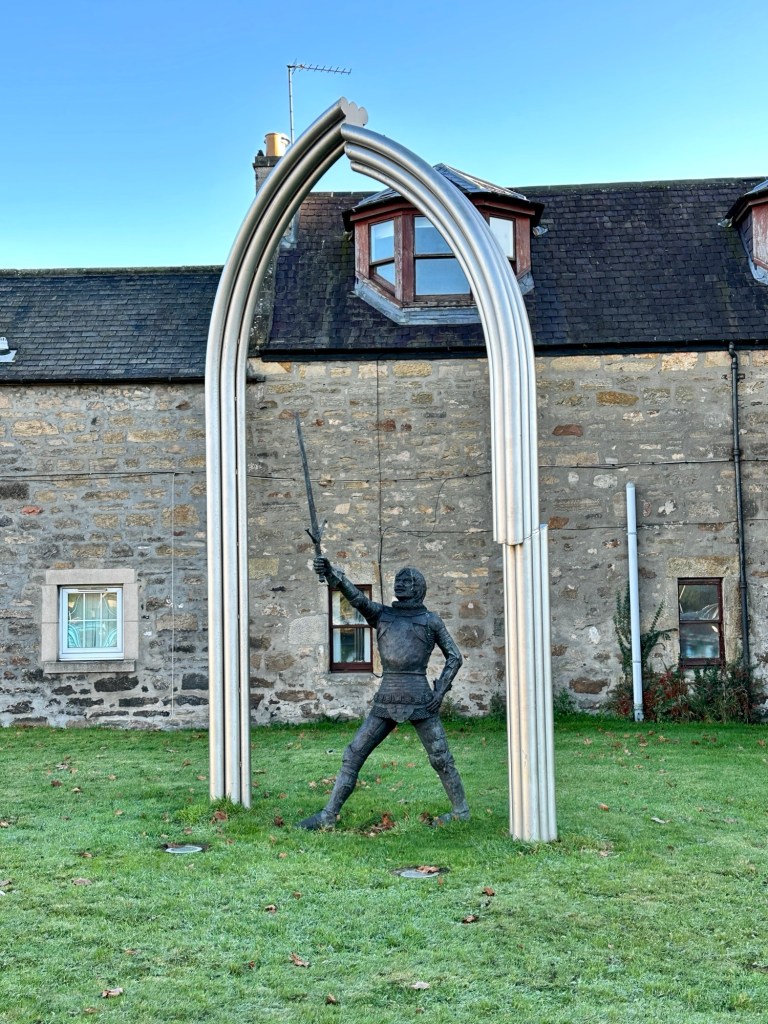
From here take the steps to your left, back down to the street, turn left and head back to the start of the walk. Just before you head along the High Street you will find a bronze statue of Alexander Stewart also known as the Wolf of Badenoch who set the Cathedral alight.

Wolf of Badenoch

Once back on the High Street it is time for a well-deserved coffee and cake!

Highlands Walks, Places to Walk

Caledonian Canal, Muirtown Point and River Ness Circuit

Distance: 7.5 miles Time: 3hrs Level: Easy longer walk Terrain: Pavements and walking paths Access: City parking is available at Rose Street IV1 1NQ. There are regular stagecoach buses and trains into the city centre from several areas. If you would prefer to find free parking you can adjust the walk a little and start your walk after the Ness Islands as there is plenty of parking around the skate park area IV3 55P.

This is a fantastic route that starts in the city and takes you along some of the beautiful waterways of Inverness. Along the way you will find some beautiful views and plenty of wildlife.

Start your walk at the bottom of Bridge Street carefully cross the road and turn left to follow along the river side. You will start to see the blue waymarker for the Great Glen Way. You will pass by several hotels and will soon come to the magnificent Faith, Hope and Charity statue that was originally on top of a building on the high street before being sold. It was returned to Inverness in 2011.

Carry along the river side path passing the footbridge and the war memorial. You will arrive at the Ness Islands. These are a collection of natural islands on the river that are accessed by bridges. Weave your way round the paths exploring the area before getting to the access suspension bridge at the end.

Take a left at the bridge and walk along the path till you come to the Whin Park gate. Turn right here passing the edge of the rugby pitch. Keep going you will soon see the underpass where you can get across the road safely, once through take the next underpass to your right. You have arrived at the canal. Cross over the bridge and take the path that runs alongside the caravan park.

You will follow this path all the way to the Muirtown Basin. There is a small section that passes the back of the marina where you will need to be careful as there may be vehicles on the move. Once you pass the canal locks the path will turn to the left and keep going till you come to the gates at the train track. Carefully go through the gates.

Here you can walk right up to Clachnaharry sea lock where you will get a cracking view of the Beauly Firth and Ben Wyvis. This is where the canal ends. Cross over the lock walkway and turn right heading back down the canal, then cross back over the railway line. Shortly after you will take a turn to the left to head for the pier.

Keep your eyes peeled for wildlife. There were plenty of wading birds when I passed and there are nice viewing areas if you want to hang around and observe them. Once you arrive at the car park and pier, turn right here and follow the road until you come to the gates of Carmarc Point. Head through the gates and up to the point, this is a great place to get some photos of the bridge. The Kessock bridge was opened in 1982 and is sometimes known as the gateway to the highlands. There is plenty of seating here, so a great area to stop for a snack before heading back into the city.

Come back out Carmarc point the way you came in and take a left, walking alongside the harbour you will come to a fork but keep left and you will pass under the railway line and then under the main road until you come to the suspension bridge.

Here you will get a great view of the city and of course Inverness castle. Head over the bridge and you will return to where you started.

Moray Walks, Places to Walk

Burghead and Clarkly Hill Circuit

Distance: 4 ¾ miles Time: 2hrs Level: Easy with some elevation Terrain: Mix of pavements, coastal trail, woodland trail, and country road. Access: Arrive by car, parking available at the opening of the caravan park. Follow the signs for the caravan park and use the car park on the left-hand side using postcode IV30 5RP. There is a No32 Stagecoach bus from Elgin that drops off not far from the start.

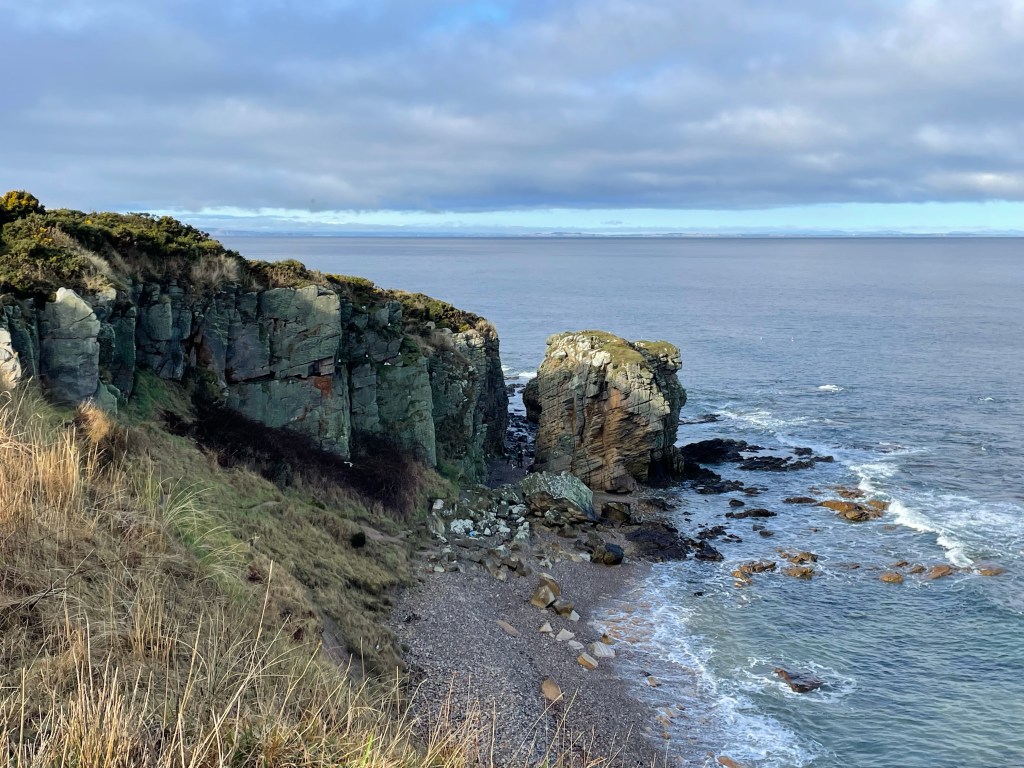
This beautiful walk on the Moray coastal trail takes you along past the harbour and on to the old railway line path with a stunning coastal view and a chance you may see dolphins passing by. There are an abundance of historical sites along the way with great information boards!

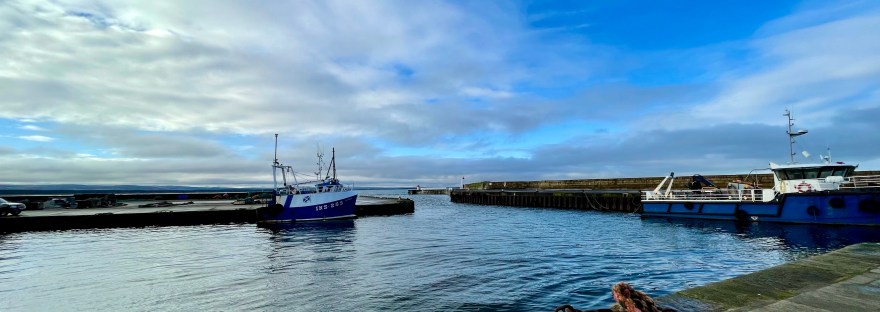
Route: Leaving the car park follow the path that takes you along to the harbour. The harbour itself was built by Thomas Telford in the early 1800’s with impressive three storey warehouses. Three of the warehouses still remain and have now been converted into flats.

Once you pass by the warehouses take the stairs up to some great views of Burghead bay. Turn right along to the visitors’ centre in the old white round building, here you can find out about Pictish Burghead dating back to 400AD.

Once you have explored the centre, head towards the old anchor and you will see the Clavie mound. This is where on the 11th of January every year Burghead celebrate their New Year with a unique fire festival called the burning of the Clavie. The significance of the 11th January dates back to the 1750’s

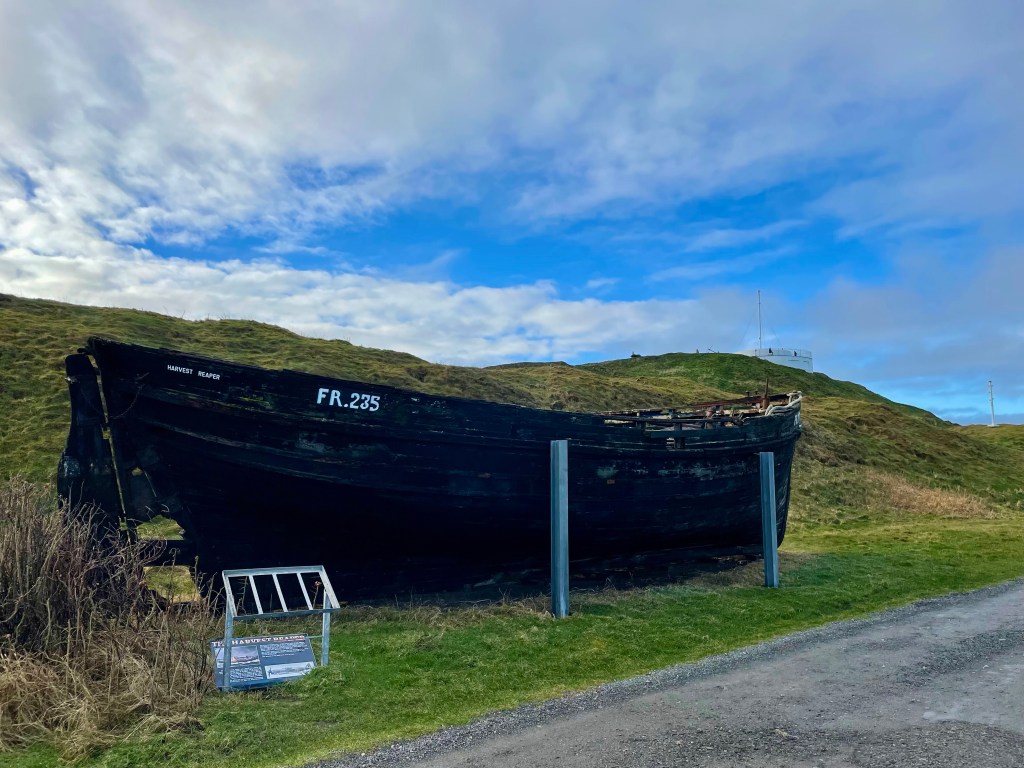
From the Clavie mound, head towards the waterside and turn right along the tarred road, where you will find the Harvest Reaper boat that was originally built in Fraserburgh in 1931 and was finally berthed here in 2015. There are always plenty of seabirds to look out for as you walk along the water’s edge.

Further on you will pass by the Maltings and on to the coastal path. You will come to St Aethan’s Well and onto the disused quarry.

There are several way markers for the Clarkly Hill short walk, ignore these. You will pass under an old railway bridge before coming to the Cummingston Crag. The sandstone crag is a popular sea cliff for mountain climbers, and you may see some climbing the Prophet Walls (as it is known) as you are walking past!

Once under the second old railway bridge you find an opening on the left-hand side; this path will double back before going over the top of the bridge. Head straight on here until you arrive in Cummingston.

At the junction you will see the sign post a little to the left for Clarkly Hill. Cross over the main road and up the country road ahead. Looking over to the left and you will get some great views of Hopeman in the distance.

You will soon come to your next way marker taking you onto a track on your right. This will take you past a pig farm before coming to your hext sign post. Here you will go through the gate and straight ahead into a wooded area.

The viewpoint is unfortunately overgrown now, turn right at the fence and follow the path through the wood till you come to the gate at the other side.

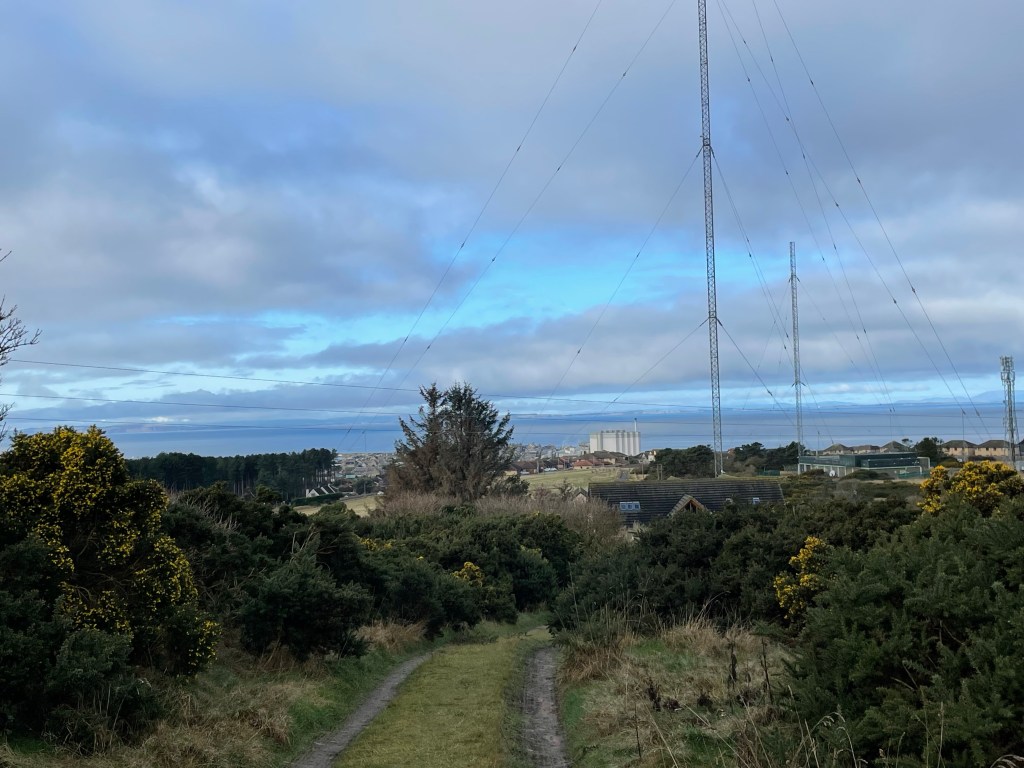
From the wood you will carry on down the road back towards Burghead taking in the views ahead. Once past the masts go through the gate and back to the main road. Cross over and turn left here until you come to the junction to turn right, back in to Burghead.

Follow the main road back until you come to the community gardens. From here turning left to arrive back at the carpark.

Aberdeenshire Walks, Places to Walk

Delgatie Castle and Woods

Distance: 2 ¾ miles Time – 1 ½ hrs Time: 1.5-2 hours Level: Easy with a little elevation Terrain: Well walked forestry paths can be a little wet under foot in places. Access: Arrive by car. To reach the start of the walk from Turriff take the A947 towards Banff.

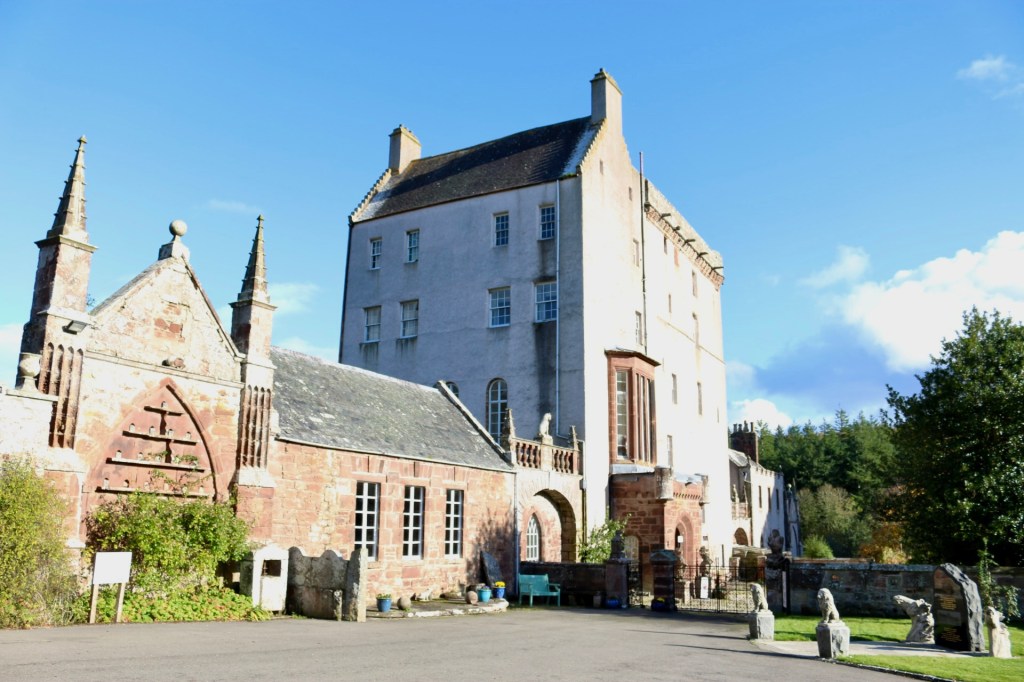
Approx 1 mile along the road there is a sign post for Delgatie Castle to the left take this road for approx 1 ½ miles.The Castle is well sign-posted and can be seen from the road on the right. You will turn into the entrance to where the Castle is sign posted and there is ample parking and a forestry information board. Delgatie Castle and Woods is a stunning walk that takes in not only a walk in the woods, you also go past Delgatie trout fishing pond where you can see ducks and swans, then round the grounds of the stunning Castle that dates back to 1030. What is visible today is from around 1570 with later wings added in 1743.

Delgatie Castle from the Woods

Route: From the car park you will see some steps at the left, head up the steps following the red way markers. Just after the steps there is a path to the right that is worth a detour where you will find the hidden ice house which would have been used to store perishable foods in bygone years. Back on the main path there is another detour to the right, a great opportunity to get your camera out as there is a great view of the Castle. On the main path again continue straight uphill and into the woods. The path will take a right then a left, keep following the main route with the marker posts.

Delgatie woods

The path will curve to the right again and you will come to a junction, you take a left here following the blue marker post. Keep your eyes peeled for red squirrels, along with plenty of other wildlife, while you are walking throughout the woods. I was lucky to see a large bird, possibly a buzzard as I left in the car. The path carries on through the woods until it will take a right and it will carry on close to the edge of the woods. To your left there will be great views of Bennachie, there is a small detour path where you can take great photos of not only Bennachie but if you look to your right, Ben Rinnes is also visible. The path eventually reaches a car park to the left, continue downhill until you reach a track, you take a left here on to the road. You will pass by the Fishing pond and keep a look out for ducks and swans on the water. Shortly after you pass the pond you will return to the carpark.

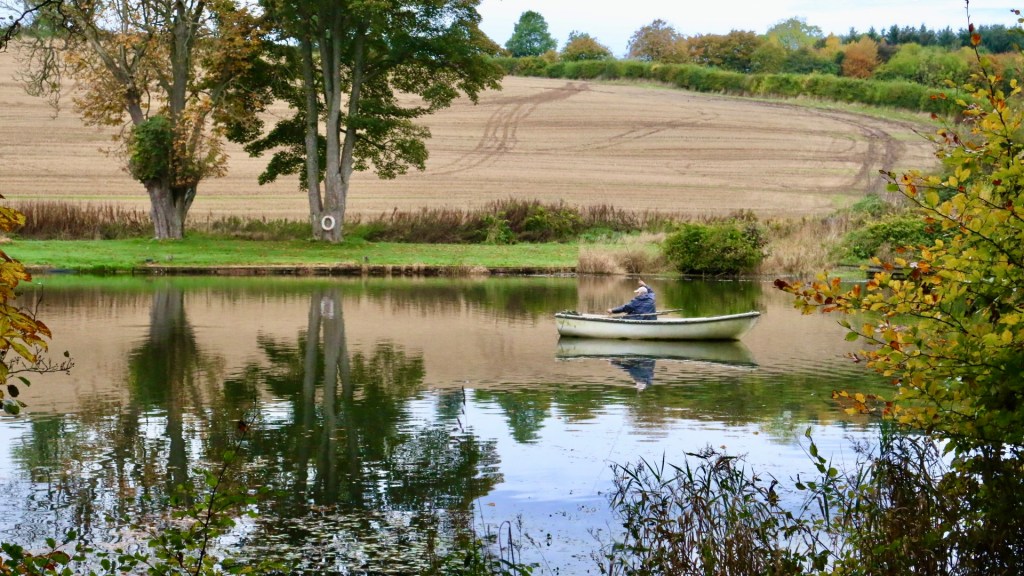
Delgatie trout fishery

At the carpark you have now an opportunity to walk round the Castle grounds, please be aware no dogs are allowed around this area. If you choose to go round the grounds take a left in the carpark past the Cottage and Dovecot. Head up the stairs, the road takes a loop right round the Castle grounds before you will come over the cattle grid then return back to the carpark.

Delgatie Castle

You can extend your visit and take a tour round the Castle and treat yourself to tea and cakes in the Castle’s very own tea room the Laird’s Kitchen. Open 10am – 4pm daily.

https://delgatiecastle.com/

Highlands Walks, Places to Walk

Anagach woods and the Old Spey Bridge Circuit.

This is a beautiful walk in the woods of Anagach in the Speyside town of Grantown on Spey combined with a walk along the banks of river Spey! There is plenty of wildlife along the way with fantastic paths! Some of the Speyside Way is included in the route.

Distance: 4 1/2 miles Time: 2hrs Terrain: Mix of woodland trails/paths and tarred road. Level: Easy Access: Arrive by car parking at the parking area at PH26 3JL. The only bus I can find is from Aviemore.

The pebble tree on the route.

Route: At the car park take the road on the right hand side. Follow the track going through the gate and keep going straight ahead till you are almost at the Spey. You will come to a carpark take a left here. A little bit further along there is opening to take you on to the tarred road.

Once on the tarred take a left continue till you you see a opening on the right hand-side to take you down to the water side. From here continue left going over the stile till you get to the Old Spey Bridge.

The Old Spey Bridge

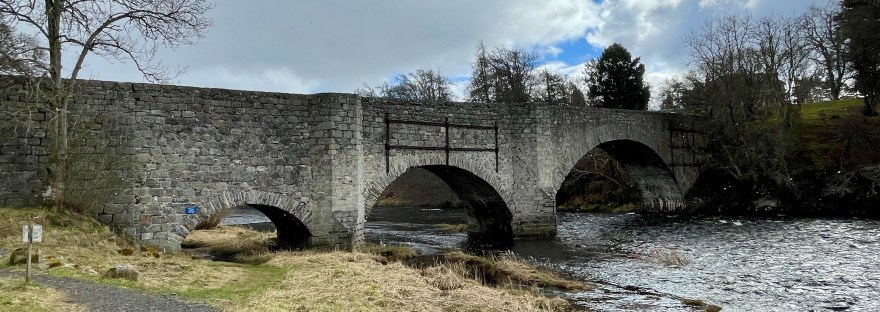
The 3 span bridge was built in 1754 after the rebellion of 1745 by General Wade’s successor, Major William Caulfield, as part of the military road that ran from Coupar Angus to Fort George. It was damaged in the great flood 1829. It was descheduled in 1992.

You will pass under the smallest arch of the bridge and shortly after go through the gate here there may be livestock (sheep when I was there) so please keep dogs on leads. Keep going along the road till you come to the next gate.

Carry on till you come to the wooden cabin on the left. Here you will see a narrow path slightly to the left. Take this path it is a little rough and some tree roots so watch your footing.

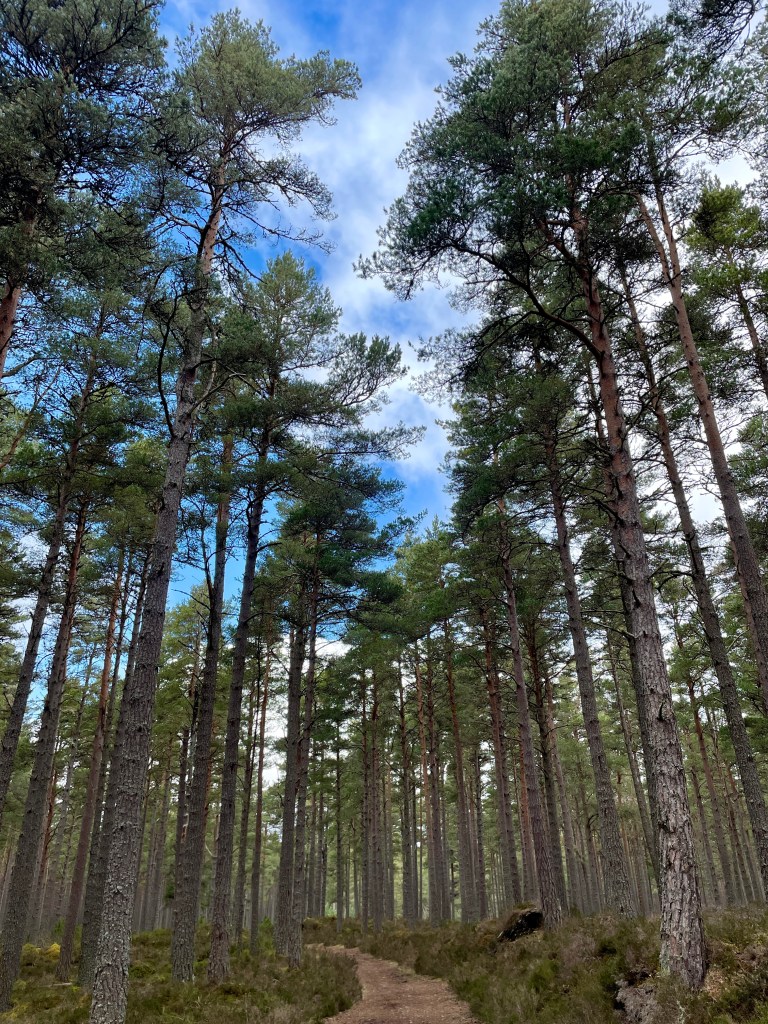
The woods!

You will come back on the road again soon and a junction. Take your right here and then at the fork take a left. Head straight on till you come to the junction with the sighs for the Speyside way.

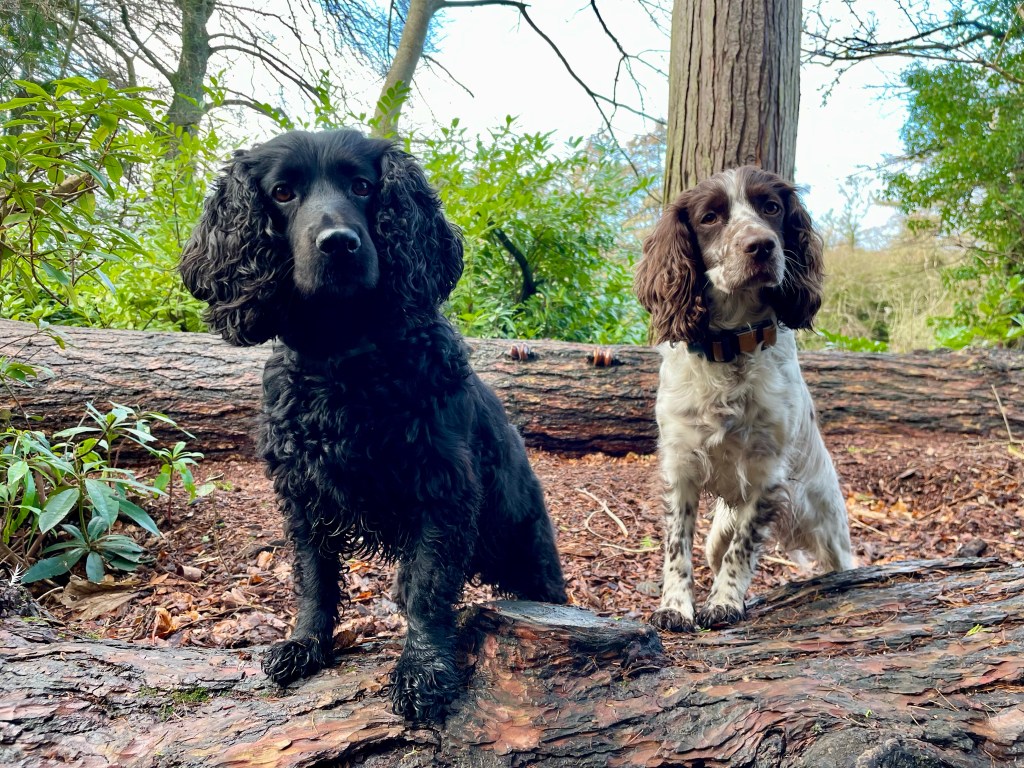
Dixy and Suzi enjoying their walk!

From here turn left and follow the Speyside way back to Grantown. Once back in Grantown once you pass the curling link keep going till you return to the carpark where you began.