Aberdeenshire Walks, New Walk, Places to Walk

Explore Kintore

Distance: 5 miles Time: 2-3 hrs Terrain: Mix of pavement, road, grass and rough trail Access: Easy with some elevation 45Getting there: I found plenty of on street parking around the Kintore Public hall area AB51 OQP. Kintore has very good public transport links. The train station is only a short walk and there is a bus stop in the square.

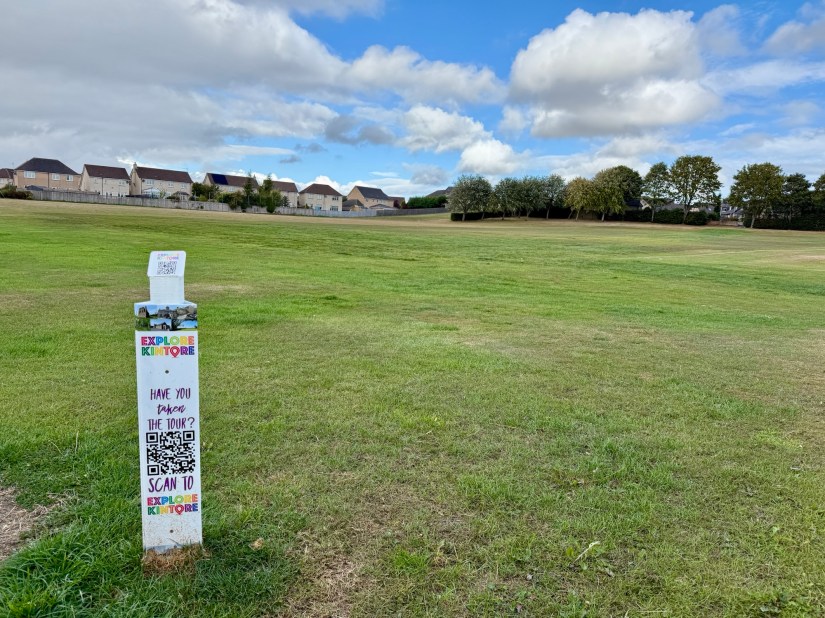
Explore Kintore is a fantastic new interactive history tour of the town. At each stop you will find a QR code to scan, giving you a short two-minute story about the place where you are standing.

I began the walk at Kintore Public Hall on School Road. Built in 1894, the hall is still run by the community and is the starting point of the tour. From here, take a left towards the church.

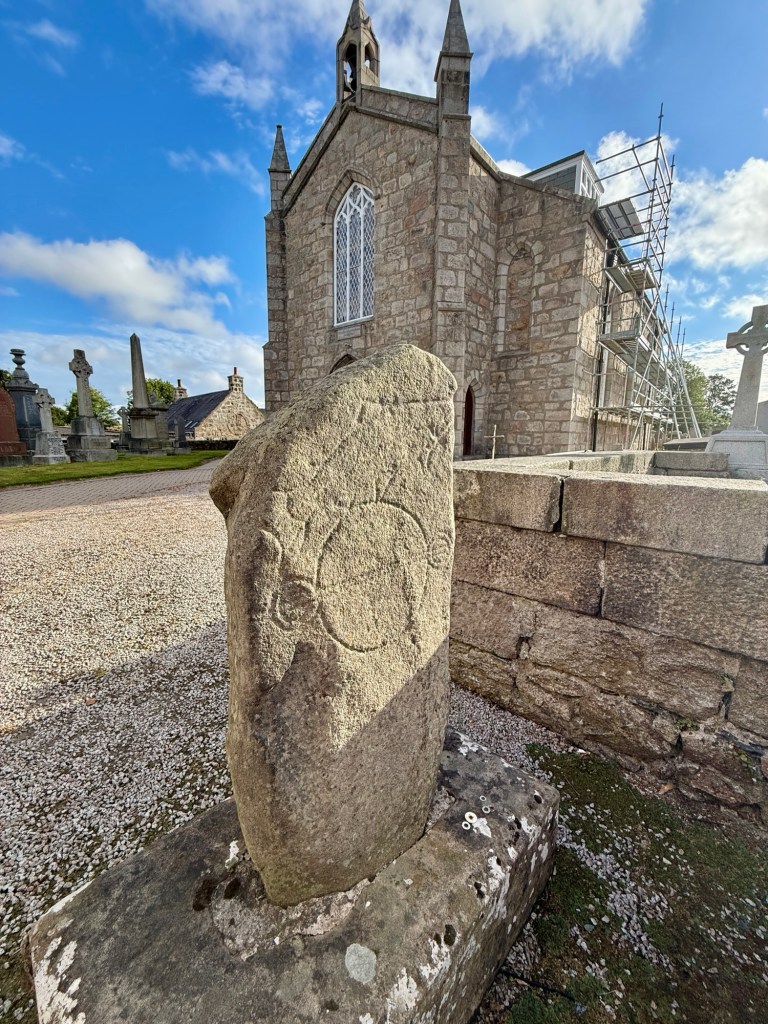
At the church you will find three QR codes. At the gates stands the war memorial, one side has a list of those who gave their lives in the Great War. Go through the gates to find records those who fell in the Second World War. Next to the gates is the Kintore Pictish Stone, discovered in the churchyard but possibly from Castle Hill. Turning around you will see Kintore Kirk, the parish church built in 1819.

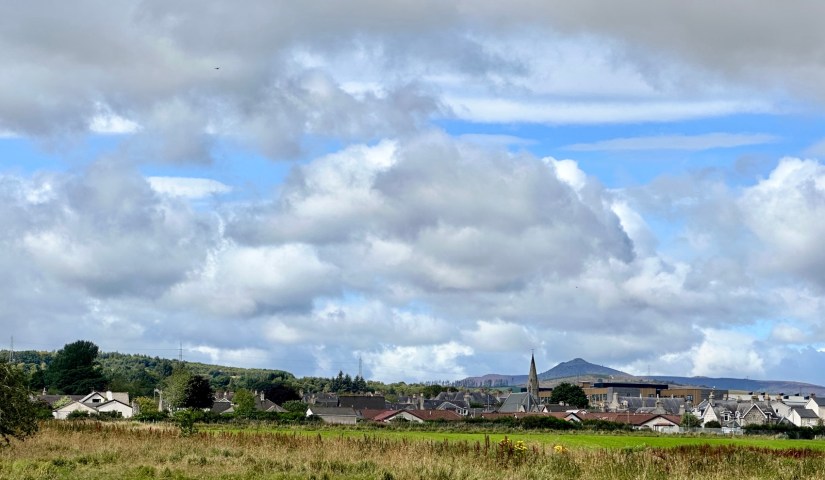
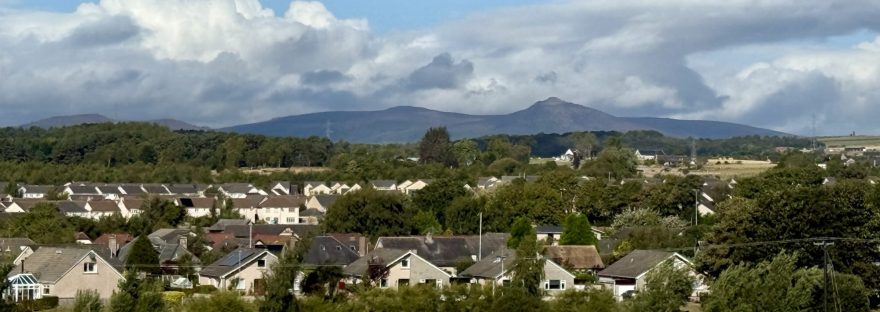
Leaving the kirkyard, turn left along Kingsfield Road until you reach the edge of town. On the right is a large white house, and just beyond it another QR code. This tells the story of the Aberdeenshire Canal, closed long ago to ma ay for the railway.I took a short detour furth along the road here to capture the view of the train tracks with Bennachie in the background.

Heading back along Kingsfield Road, continue into town until you reach the road called Howieslap on your left. Turn down here and walk straight on, when you come to wooden sheds you will see a grassy track. Follow the track right to reach a footbridge over Tuach Burn.

Cross the bridge and head uphill to the mast on Tuach Hill, where you can also bag a trig point. Looking back over Kintore, take the track on your left. This leads past an old quarry and the remains of Carn Ulach, a stone circle. Keep following the trail until it rejoins the main track.

Soon you will come to a fork. Take the left path down into the park and cross another bridge, gated but accessible. After the bridge turn right to find a bench with a QR code about Tuach Hill.

From here continue straight on, then turn left at the next junction. At the end of the road, turn right and cross over. A path with bollards to the left leads you to the play park, built on the site of the Roman camp known as Deer’s Den. Another QR code here tells its story.
From Deer’s Den, continue along Hallforest Drive. Cross the road at the roundabout and carry on along Castle Road, under the bypass, until you reach a large house on the right. Just beyond it, turn right for Hallforest Castle.

Dating back to the 14th century, Hallforest Castle is one of the oldest in Scotland. After visiting, follow the road past the ruins, turning right, then right again, and finally left to return under the bypass.

Keep straight until you reach the roundabout.Take a left onto Hallforest Avenue, then turn left again at the T junction onto Forest Road. This leads you back to the square for the final two QR codes.

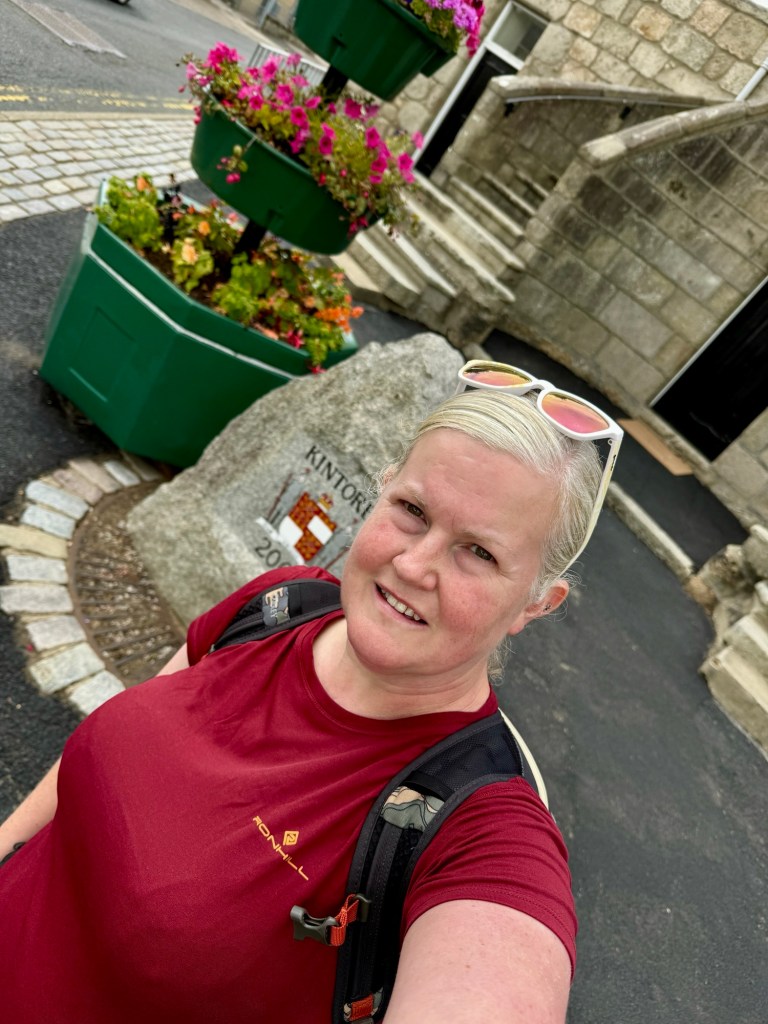
The first is at Kintore Town House, a striking building commissioned by the Earl of Kintore in the 18th century. At the front stands the Kintore Millennium Stone. The final QR code is at the Kintore Arms Hotel.
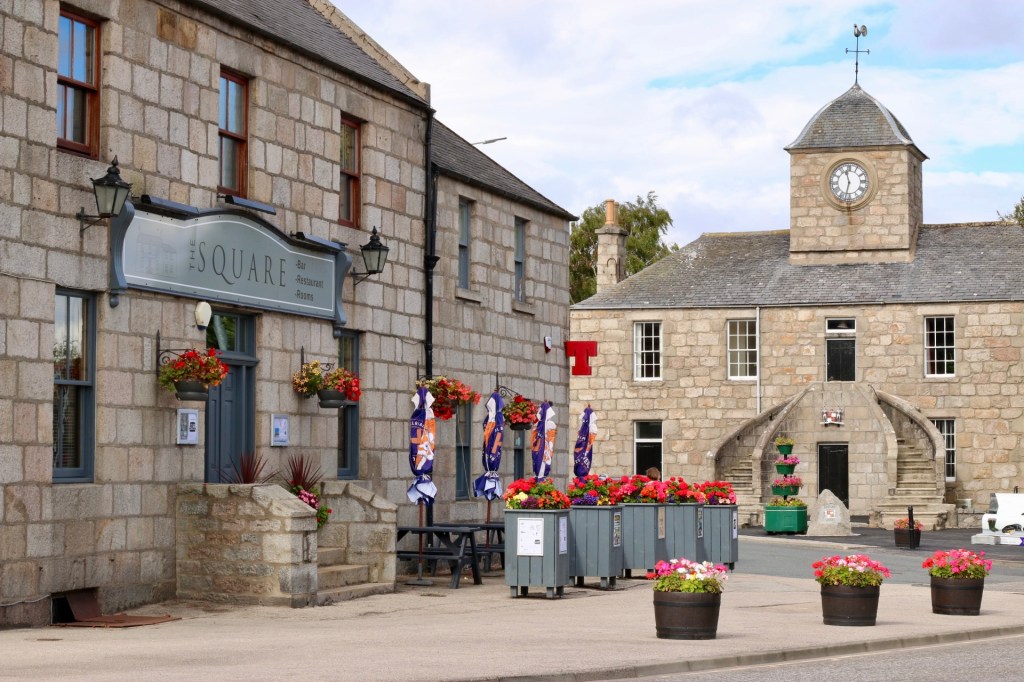
This tour is a brilliant way to uncover the history of Kintore. It is well designed, easy to follow, and brings the past to life. I hope other communities take inspiration from this project and create similar tours to celebrate their own heritage.

kintore.org.uk

Aberdeenshire Walks, Places to Walk

Kirk of Skulls & Coastal Circular, Gardenstown

Distance: 5 miles. Time: 2-3 hrs. Level: Easy, with some elevation. Terrain: A mixture of road, grass track, and well-maintained paths. Access: As you travel along the B9031 from Macduff, you’ll see a signpost for St John’s Church (AB45 3ES) on the left. Shortly after, you’ll find an old quarry on the right, which is the best place to park. The What3words location for the quarry is: ///townhouse.inhabited.note

Please note, there is no direct public transport to the start of this walk. However, you could take the No. 273 bus to Gardenstown and walk to the church from there, although the path may be overgrown in places.

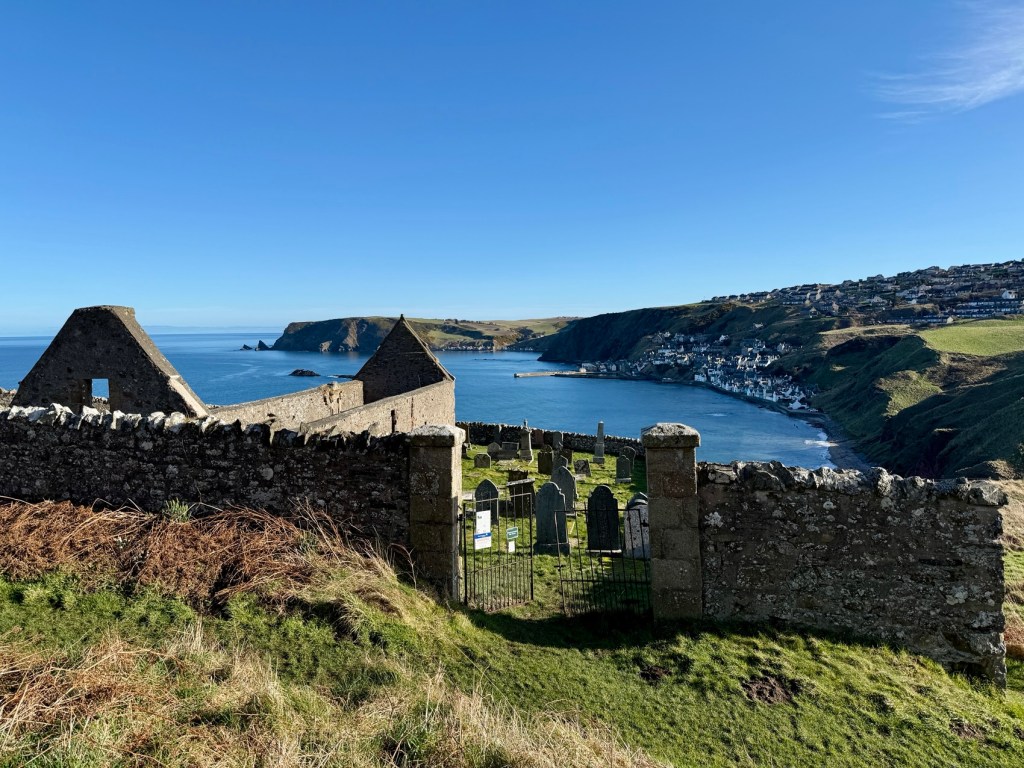
This is a beautiful circular coastal walk with stunning views and a fascinating slice of local history. At its heart lies the atmospheric ruin of St John’s Church, better known as the Kirk of Skulls, perched dramatically above Gamrie Bay.

Start at the old quarry parking area and carefully cross the road to join the small road signposted for St John’s Church. Follow this road as it winds along past the church’s own small carpark. Although you can park here, the rough condition of the access road makes the quarry a better option.

Continue along the track beyond the carpark until you reach the ruined church and graveyard This is St John’s Church, a historic 11th-century site dedicated to St John the Evangelist. Most of the ruins visible today date from the early 1500s, with later additions in the 17th century.

The nickname “Kirk of Skulls” comes from a dramatic local legend linked to a battle in 1004 AD, the Battle of the Bloody Pits. According to tradition, a Viking fleet sought shelter along the Banff coast during a fierce storm. Short on supplies, around 600 Vikings landed near present-day Gardenstown, hoping to raid the area. Unbeknown to them, the Thane of Buchan had anticipated an attack and assembled a strong local force.

A brutal battle followed, ending in the Vikings’ defeat. The heads of three Viking leaders were said to have been displayed within the church until the 19th century, a gruesome detail that inspired the church’s eerie nickname.

After exploring the ruins, continue a short way beyond to a bench with a panoramic view of Gardenstown, locally known as Gamrie. Retrace your steps slightly to the map board, then head up the well-maintained footpath. There is a steady climb here as you make your way inland.

At a junction, take the left-hand path. After passing a farm, continue on the right-hand path, which leads past a row of wind turbines.

Once you reach the coastline, pause to soak in the spectacular views across the Moray Firth. Turn right here to follow the coast back toward Gardenstown, with views of Crovie appearing along this stretch.

Eventually, the path swings back inland. Before you reach the previous junction, take the left turn which leads you back down toward the church. From there, simply follow the road back to the quarry, where your walk ends.

This circular route offers a rich mix of history, coastal beauty, and peaceful rural scenery. It’s an ideal walk for a sunny morning or afternoon, just be sure to bring sturdy footwear and a camera for those views.

Aberdeenshire Walks, Places to Walk

The Riverside and The Bass, Inverurie. 

Distance : Approx 4 miles. Time : 2hrs. Terrain : Pavements, road and riverside paths that may be muddy so wear sensible footwear. Access : Car parking is available at Burn Lane car park AB51 3SH that is just round the corner from the start of the walk (Car Parking is a couple of pounds). There are regular buses from Aberdeen to Inverness that stop outside the town hall at the start of the walk. The train station is only a short distance away.

Inverurie is one of the largest towns in Aberdeenshire and is packed with plenty of independent shops. Only a short walk from the town centre, you will find yourself in the countryside, with numerous opportunities to discover interesting historical sites along the way.

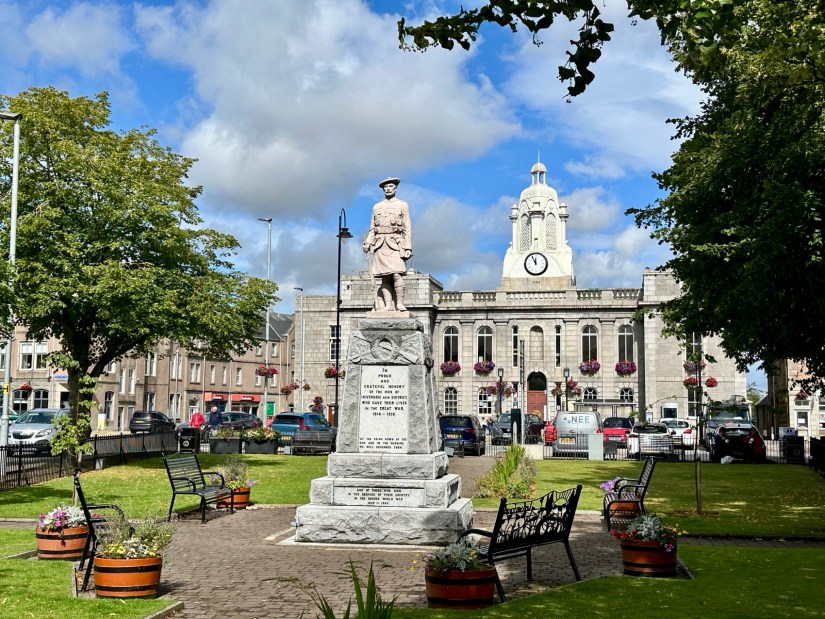
Start the walk from the Town Hall, heading across the road to the triangular-shaped Garden of Remembrance and War Memorial. Continue along the High Street until you reach the fork in the road. Take a right here onto St James’s Place and keep going until you reach the roundabout. Cross over the road at the island, and you will find the entrance to the riverside paths on your left. Walk down to the riverside and take a left under the Don Bridge.

Before 1790, Inverurie could only be reached by a ford across the River Don. The bridge that stands now was built in 1924. When I was there, I was greeted by many ducks. I’m not sure if they were hoping I had something for them to eat.

Keep following the path. Some areas are narrow and a little overgrown, so be careful along the way. Once you reach the railway bridge, head under it. You will now be in an area called the Stanners. This is the earliest site of habitation in Inverurie, where Bronze Age artefacts have been found. The townspeople gradually moved to Inverurie’s present location to avoid floods. Follow the narrow path that runs along the riverside. The path eventually turns to the left, continue until you reach the wooded area.

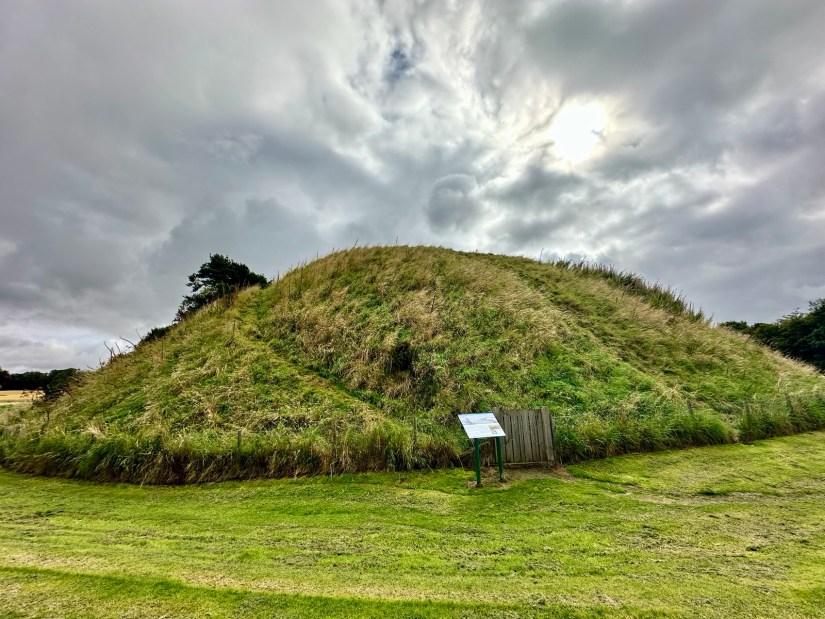
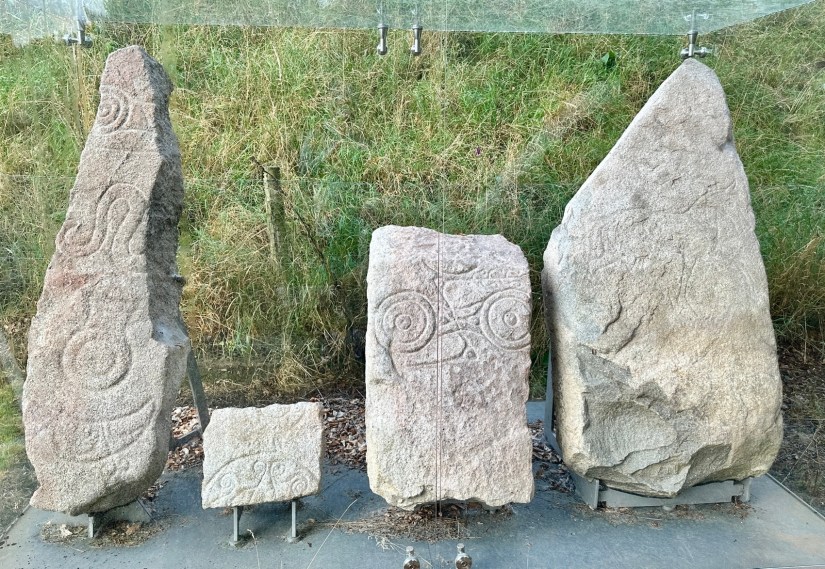
When you come to the bridge, take a left until you find the opening in the fence on your right. Be careful here as this takes you onto the road. When it is safe to do so, cross the road and go through the gates into the cemetery. You will find two large mounds known as The Bass. These were formed from melting ice during the Ice Age. A motte-and-bailey castle was built on top of the Bass in the 12th century by the Earl of Huntingdon. The mound was reshaped and cut in two in the 1800s; the smaller mound is known as Little Bass. Between the mounds, you will find four Pictish symbol stones dating from 400-900 AD. They are said to have been found built into the walls of the old parish church.

Beside the Bass, there is an opening in the wall where you can get back onto the path. Keep following the side of the cemetery wall until you return to the riverside path. Take a right here, and you will soon come back to the waterside. A path winds its way along the River Urie, I spotted swans on the water along here and a sparrowhawk in the trees. The river will take a left turn, and you will come into a wooded area. Here, you will find a path that turns left and heads back into the town. You will get an excellent view of Inverurie with Bennachie behind it.

Follow this path until you reach the railway crossing and when it is safe to do so, go through the gate and cross the line. Go straight ahead, passing the car park, houses, and buildings, until you return to the High Street. Take a right to return to the Town Hall and the end of the walk.

Aberdeenshire Walks, Places to Walk

Banff and Whitehills Circular

Distance: 5 ½ – 6 miles Time: 2 – 3 hrs Level: Easy with some elevation Terrain: Mix of pavement, track, road, and beach Access: Car parking is available at the Quayside car park (AB45 1HQ). Regular buses run between Elgin and Aberdeen, with the nearest bus stop located at Chalmers Hospital, just a short distance from the start of the walk.

This is a wonderful coastal walk from the Aberdeenshire town of Banff to the neighbouring village of Whitehills. Before setting off, check the tidal times so you can enjoy walking along the beach.

From the Quayside car park, head towards the beach, taking the coastal path along Scotstown. Watch for cormorants drying their feathers on the rocks, and you may even be lucky enough to spot dolphins passing by.

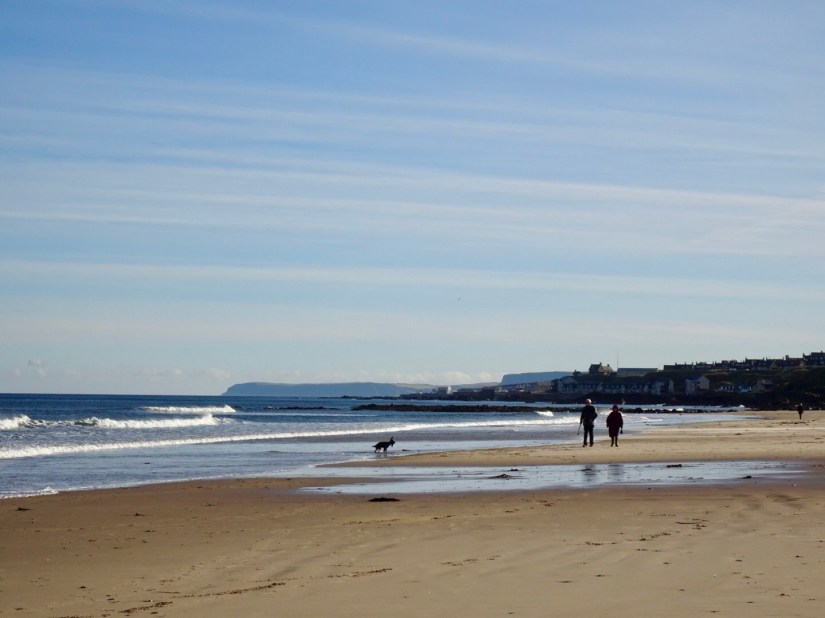
Soon, you’ll come to steps leading down to the beach if you’ve timed the tide right. Banff Links is a fantastic beach to walk along, and on a sunny day, it’s lovely to take a wee paddle as you stroll. When you reach the end of the caravan park, take the ramp on your left to return to the path.

Follow the path and go over the footbridge until you reach a fork. Take a right here, and shortly you’ll arrive at Blackpots Playpark and Harbour.

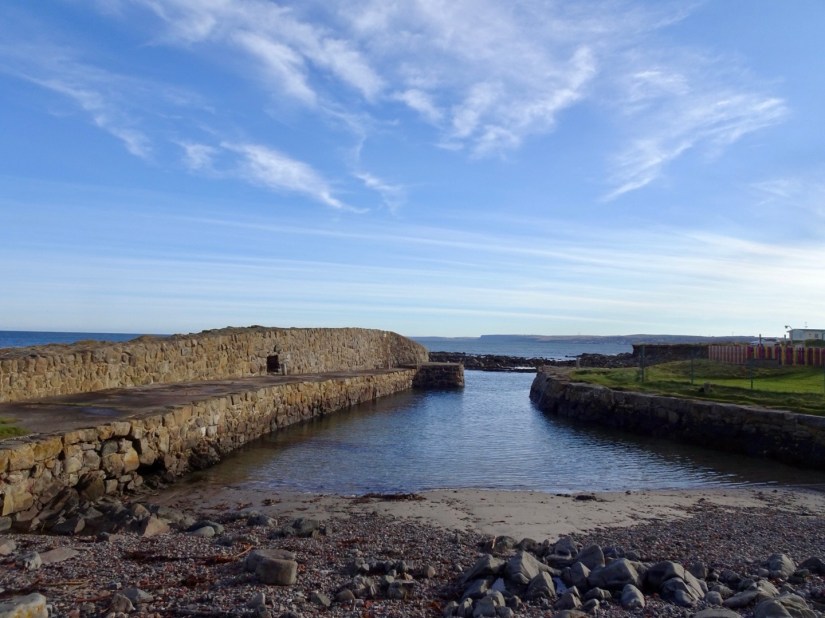
The small, disused harbour was built in the late 18th century. The playpark was a favourite spot for my kids when they were younger, and I have fond memories of enjoying fish and chips with my mum while the kids played. fter the playpark, you’ll come upon the Fisherman’s & Seafarers’ Memorial and Whitehills Marina.

Continue along the road, passing Downies Fish, and keep an eye out for the “Light the North” lighthouse.

Stay on Seafield Street until you reach the post box and telephone box then take a left along Loch Street. Continue on Loch Street until you leave Whitehills. Soon, you’ll come to the coastal path on the left, take this path back towards Banff.

Along the coastal path, you’ll find the Red Well. The name comes from a spring that emerges from the ground, leaving red deposits, possibly due to iron content. The nearby beehive-shaped structure is thought to have been built by the Romans.

After the Red Well, continue on the path until you reach a fork just before the footbridge. Take the fork to the right and follow the track to a junction. Take a left here, follow the road over the bridge, and continue until the road splits.

Take the road on your right, which will lead to the Banff Links car park. Turn right and walk through the car park. At the other end, you’ll find a path with a gate. Go past the gate and continue along the path. After the third blue pavilion, you’ll come to another fork; take the track to the left, passing a small stone building (possibly an old icehouse).

Stay on this path as it winds through Scotstown. You’ll pass behind a row of houses; at the end of these, you’ll see some sheds. Take a left here to return to the Quayside car park.

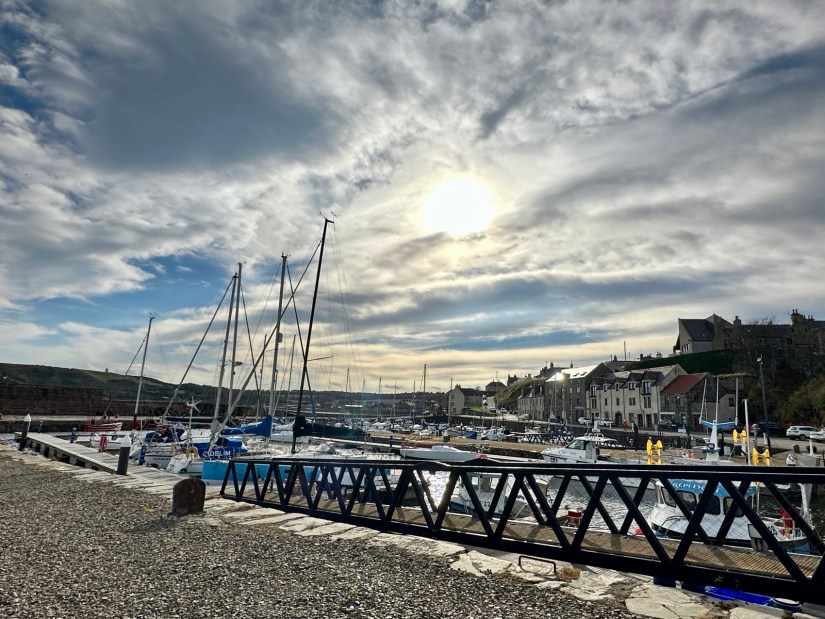
Next to the car park, you’ll find the recently upgraded Banff Harbour, which is worth a visit before finishing your walk. You’ll enjoy lovely views of Macduff from the harbour.

Moray Walks, New Walk, Places to Walk

Hiking up Ben Rinnes

Distance: 4 3/4 miles Time:2 1/2hrs – 4hrs Level: Moderate with lots of elevation. Access: Arrive by car. Parking available at the foot of the hill at AB55 4DA. No public transport.

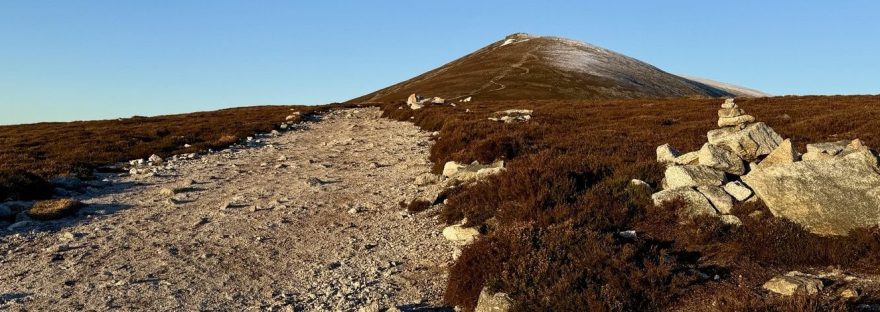
Ben Rinnes is 841 metres high and is classed as a Corbett. It is a mountain so please be mindful of this and be prepared before setting off. Make sure you have suitable clothing, footwear, food and water. The weather can be very different at the bottom as it is at the top.

From the carpark head through the gate. Here you will follow the path as it meanders up the first small hill known as Round Hill. At the top of Round Hill, the path flattens out briefly. Then you start to ascend Roy’s Hill. You will continue on the well made path throughout.

As you reach the summit of Roy’s Hill, the path flattens out again. You will get a welcome breather before your final ascent to the summit of Ben Rinnes.

The last section is the most challenging with the mix of path and steps on the way up. This is a great opportunity to stop and take some photos. It will give you a chance to catch your breath.

When you reach the top, head round the back of the tor (large rock formation). Then climb the last wee bit to get to the summit trig point. If you are lucky enough to have a calm, clear day, you will enjoy stunning views across Moray. You can also see the Cairngorms on such days.

To ascend, you will retrace your steps down Ben Rinnes. Then, head down Roy’s Hill and Round Hill before returning to the carpark. This marks the end of the hike.

Moray Walks, Places to Walk

Cairn Cattoch, Archiestown

Distance: 5 ½ miles, Time: 2 – 2 ½ hours, Level: Easy, Terrain: Forestry track, narrow woodland paths and quiet village walking. Access: Arrive by car parking in the square parking area nearest the hotel AB38 70Q where the walk begins. There is also a M-Connect bus that runs from Elgin to Archiestown Monday to Friday.

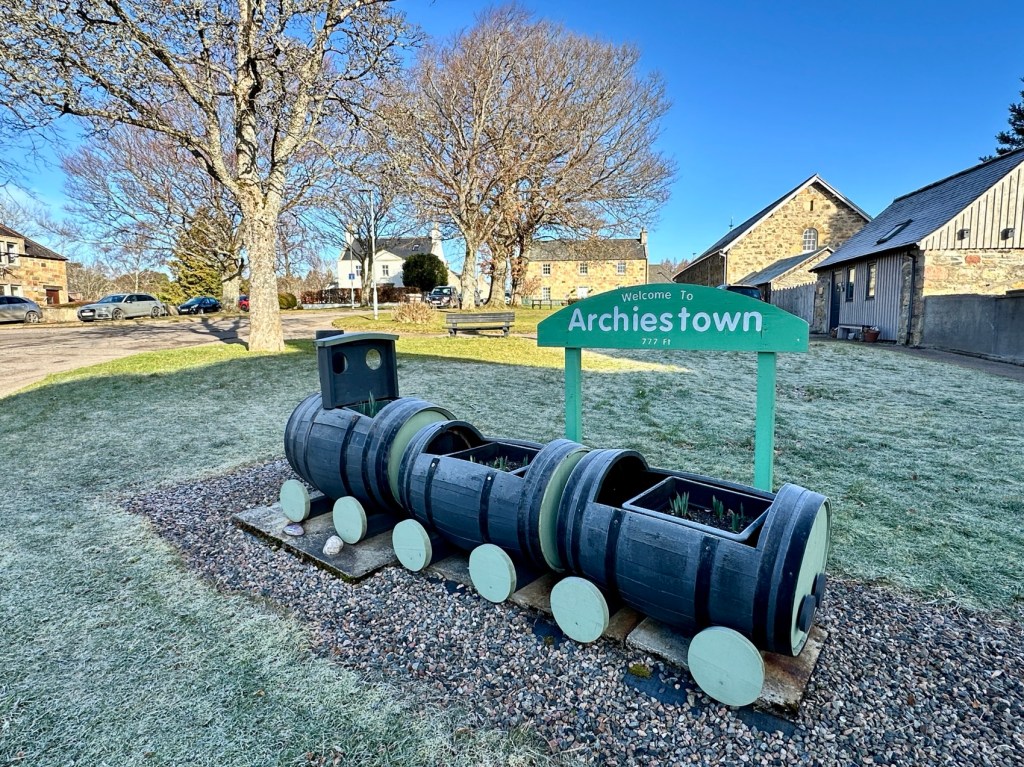
This is a beautiful woodland walk with a gentle hill hike in rural Moray. The walk begins in the village of Archiestown which was founded in 1760 by Sir Archibald Grant of Monymusk. The well kept square has several information boards that are rather interesting reading on the history of this lovely wee village.

After you have explored the square, head up past the war memorial and go straight on. Soon you will leave the village and start heading towards the woods. You will pass one more house to the right hand side before you come to the forestry gate.

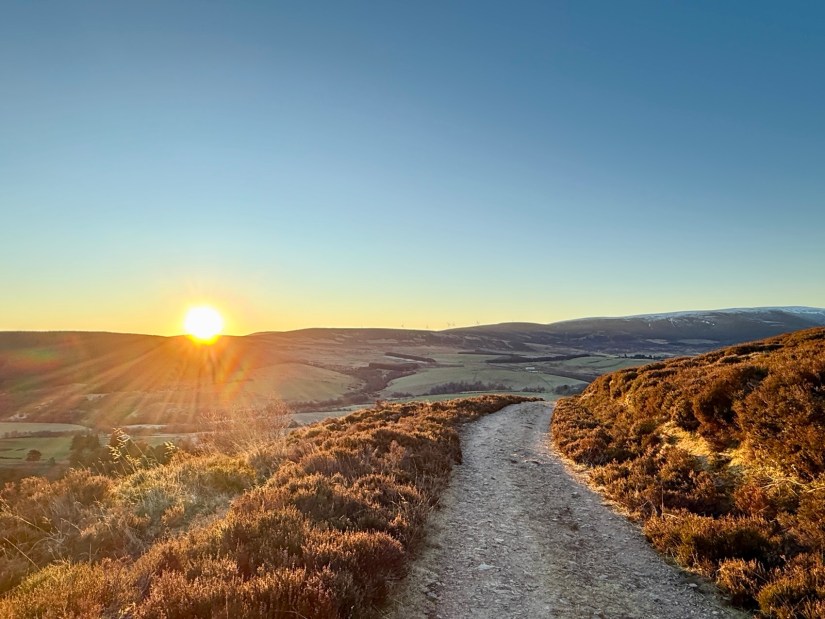
At the gate go straight on and you will begin the gentle climb up through the woods on the fantastic track which would also be suitable to cycle and even great for an off-road buggy. Make sure you look back as you are walking uphill as there are some amazing views of Ben Rinnes behind you.

You will pass by a few paths on your left but ignore these and carry straight on. There were plenty of birds in the trees as I was walking,

and I am sure there was plenty of wildlife that was most likely hiding from my dogs. I did have a look for frog’s spawn and other beasties in the ditches at the sides of the paths but unfortunately I didn’t spot any but maybe you will.

After about 1 ½ miles the path will start to curve to the left after another ½ mile there is a slightly rougher track to your right. Head up this track which will shortly take a turn to the right. Carry on until you come to the next junction.

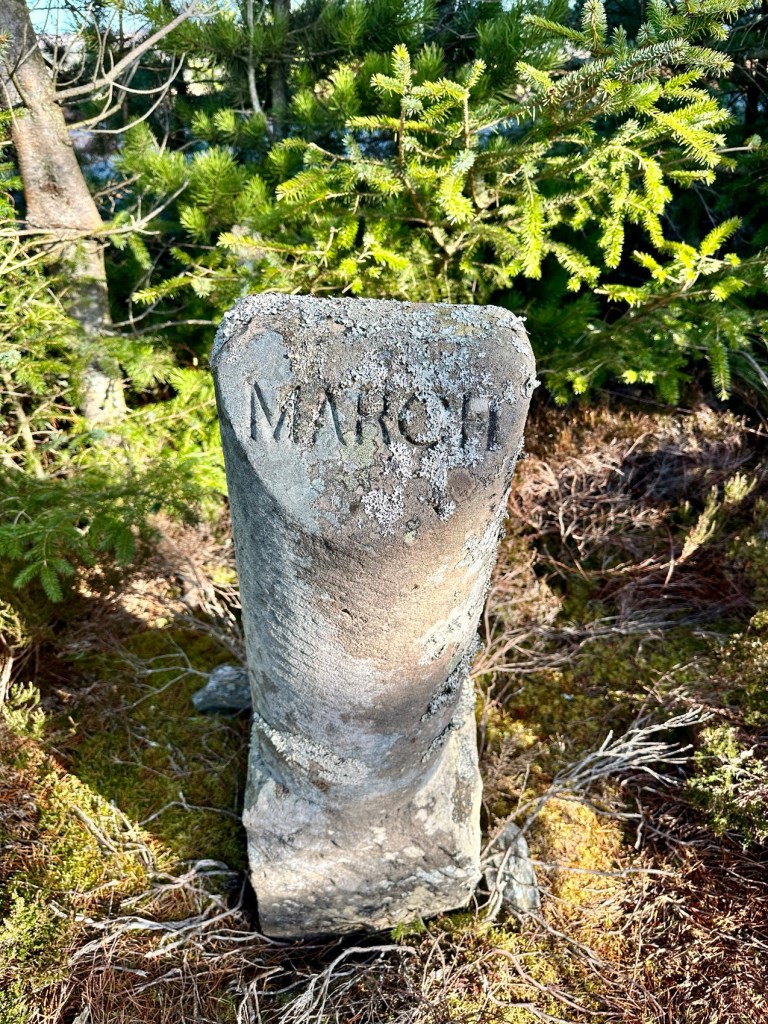
Take the path that turns up to the left that is signposted to Cairn Cattoch, soon you will come to a stone with March carved into it. This stone marks the border between Knockando and Rothes Estates. This is where the Riding of The Marches comes from which was an old custom of a ceremonial procession usually by horseback to make sure the neighbouring estate has not encroached on the owner’s land.

(The next section of the walk is no longer suitable for a buggy or cycle)

At the March stone turn left and follow the very rough narrow track until you reach the summit of Cairn Cattoch where you will find a marker post and another March Stone.

There is a fantastic view of the countryside in front of you and the Cairn Uish wind farm to your left. After you have taken all your photos and had a snack you can retrace your steps until you come back to the Cairn Cattoch sign post.

Take a left here and start your gentle descent back down the hill, keep going until you come to a gate for the quarry.

Take another left here so you can skirt round the side of the quarry and pass by another gate at the opposite end of the quarry. Follow the track until the next junction.

Turn left at the junction and go straight down the track enjoying your final section of your walk in the woods until you return to the gate and shortly after you return back to the village.

Aberdeenshire Walks, Places to Walk

Gardenstown and Crovie Coastal Circuit

Distance: 3 ¾ miles Time: 2hrs Level: Easy with some elevation Terrain: Some road walking, grass path, coastal path and beach. Access: Arrive by car, parking at the Crovie Viewpoint car park AB45 3JQ. Unfortunately, I was unable to find any bus routes for this walk. The coastal path is tidal so please check the tide times before you set off. The coastal path has just recently been clearer after being closed from a landslide. Using the path is at your own risk!

This is a fantastic coastal walk even in the rain, so I discovered anyway as Billy Connelly says there is no such thing as bad weather, just the wrong clothing.
Route : Starting in the carpark you will see an opening to the left towards Gardenstown. Go through the opening and follow the path that takes you along the cliff tops with fantastic views looking back over Crovie and looking on to Gardenstown.

The path eventually takes you to a housing estate on the edge of Gardenstown, go through the gate and take a right and walk along Morven View Road. At the junction take a left on to Garden Crescent, right on to Bracoden Road which then leads you to Gamrie Brae.

Gardenstown was originally called Gamrie and is still known as Gamrie locally. It was founded in 1721 by Alexander Garden as a fishing village.

Just before the bus stop, take the road to the left along Fernie Brae. Follow this road until you reach the row of sheds. Just after the sheds, on the bend you will find a grass path to your left. Follow this path until it passes between two houses and leads you to a T-junction. Take a left here until you reach the next junction.

Head down Denside Lane until you reach the seafront. Take a left here and enjoy a walk along the seafront and on to the beach at the end. You can extend your walk if you want to explore the remains of St John’s Church that you can see high up in the cliffs.

Turning back at the end of the beach and once on the road, pass by the houses and head towards the harbour. At the fork on the road take a left and walk along the side of the harbour. You will find an area with picnic benches which is a great place to stop for a rest and a snack.

Keep going past the harbour until you see the boat mural on the side of the building. Take the opening to the right of the mural then walk through the car park, then take the next left following the sign post to the next carpark. Once you pass all the sheds you will find the sign post for Crovie.

Follow the amazing coastal path that leads you along the bottom of the cliffs until you reach the small 18th century village. On the path you will pass the memorial for those who helped with the rescue of the crew of the SS Vigilant which ran aground here in 1906. Once you reach

Crovie take your time to explore the village, walk to the end of the narrow street and admire the quirky buildings. A major storm destroyed large parts of the village in 1953 so now all that remains is a single row of cottages.

At the pier take a left and you will see an opening on the right beside the boats that are stored nearby. This path is a bit of a hike but is a shortcut to get you back to the carpark. Once off the path just follow up until you reach the carpark and where you first began and the end of the walk.

Moray Walks, Places to Walk

Linn Falls Circuit Aberlour

Distance: 2 miles Time: 1hr Level: Easy Terrain: Sections of pavements and road, along with a section of forest path and track. Some steps and rough ground. Access: Arrive by car or public transport. Stagecoach No 36 bus runs between Elgin and Aberlour at regular intervals throughout the day. Car parking available at Alice Littler Memorial Park AB38

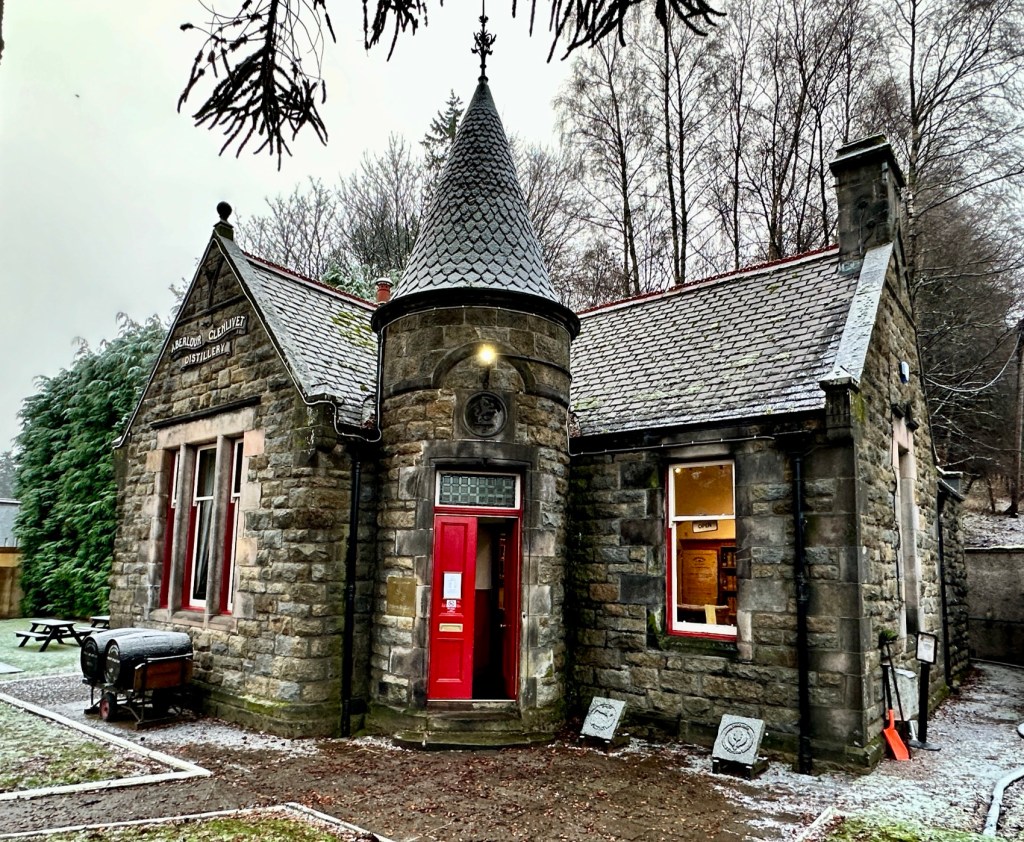
This short but beautiful circular route is based around Aberlour in the heart of Speyside. The walk takes you out of the town and into the woods. Following the woodland path, you will come to the stunning Linn Falls (Linn of Ruthrie waterfalls). On your return to the town, you will pass by the Aberlour Distillery before finding the hidden packhorse bridge.

Starting from the carpark. To the right of the play park, you will see the bridge with the path over it. Walk over the bridge and past the back of the old train station, heading towards the church. It is worth taking a look round the front of the station. There has not been a train here since the line east to Dufftown closed in 1971 but the station still looks amazing over fifty years on.

Back at the Church, go towards the square, cross over the main road and pass the Co-op on your left-hand side and head up Queen’s Road. Once past the Fleming Hospital on your right, you will see a sign for Glenallachie and Fairy Knowe. Follow the narrow path up on to the road turning right. Just past the street of houses, take the narrow road to the back of sheds. It is signposted to the falls.

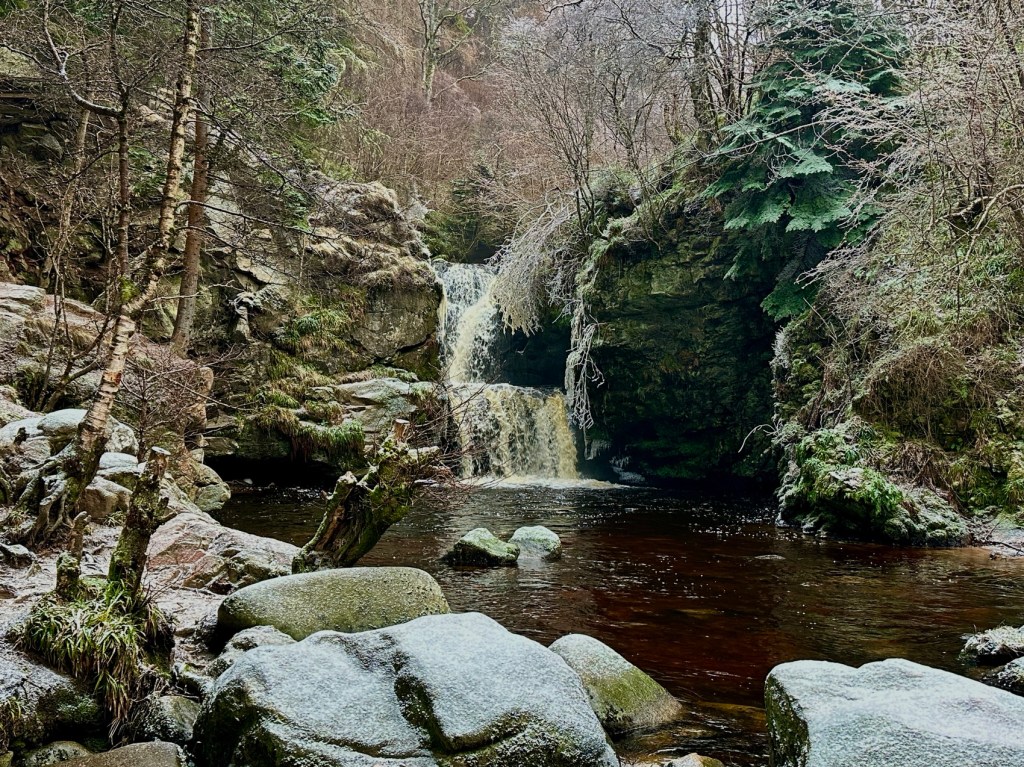
At the end of the tarred, narrow road, you will come to a gate, pass through the gate and on to a woodland path. Stay on the main path, ignoring any paths that branch off. The main path will curve to the right, and you will descend steps with a handrail and soon see the beautiful double-cascading waterfall.

The area beside the waterfall is a popular wild dooking spot in the summer months and there is a great wee area where you can relax and have a picnic. There was snow covering when we visited so dooking and picnics was not an option.

Once you have explored the falls, follow the Burn of Aberlour round to the right and after a short walk you will pass Aberlour Distillery on your left which was founded in 1879 by James Fleming. Fleming left a lasting legacy in Aberlour building the Fleming Hall and then the Fleming Hospital. When you reach the main road, you can take a closer look at the distillery if you take the footbridge on your left.

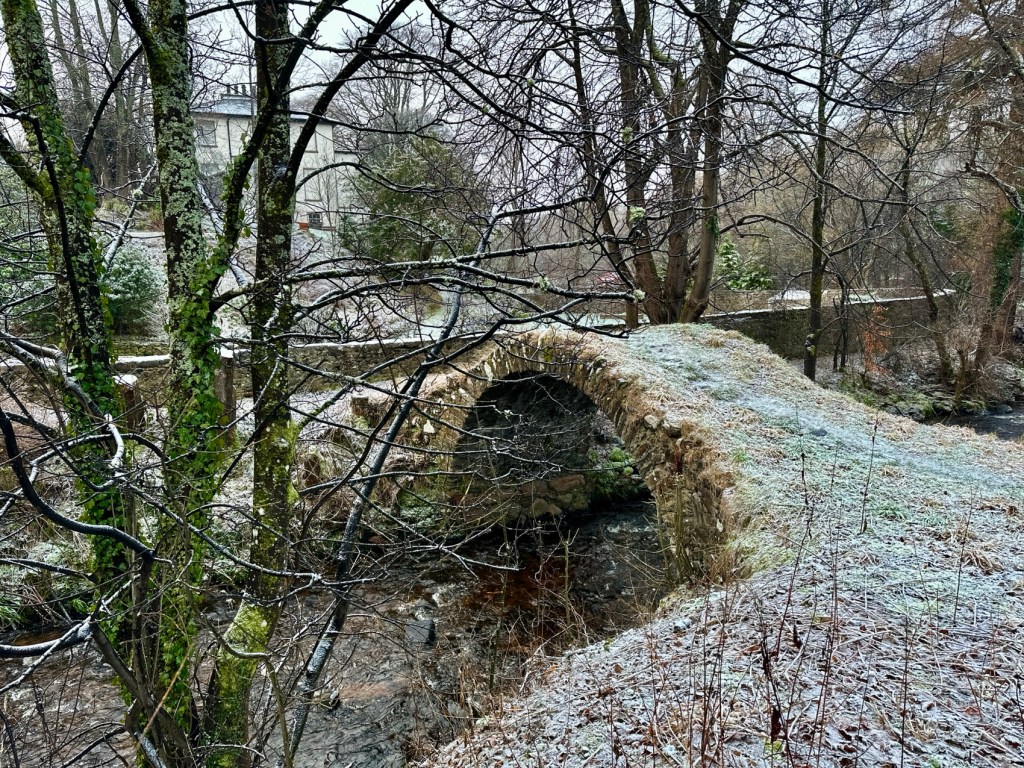
Here you will cross over the main road, be careful of traffic as this road can be busy. Once safely across, look over the bridge and nestled in the undergrowth there is a small, old packhorse bridge that was built around 1624.

Take the path to the right-hand side of the packhorse bridge which will lead you back to the car park. Just before you finish your walk take a look down at the Victoria Bridge which is a suspension footbridge that was built in 1902 to replace a ferry that was previously in service. The bridge was also funded by James Fleming and initially cost a penny toll to cross hence it is often known as the Penny Bridge.

From here you go back to the carpark and the end of your walk.

Moray Walks, Places to Walk

Exploring Elgin

Distance: 3 miles. Time: 1½ – 2hrs. Level: Easy with some elevation, Terrain: Pavement, woodland and grass track. Access: Arrive by car, parking available beside the Elgin Town Hall IV30 1UL (parking £1 for the day). The stagecoach bus station is close to the start of the walk with great bus links throughout the area. 

This is a great walk which is easy to access during the winter months with plenty of notable historical places along the way.

Start the walk from the High Street Fountain on the Plainstones (IV30 1BW). Facing the war memorial head along the High Street.

Passing by the St Giles Church that dominates the High Street with its Greek style pillars. The church was designed by Archibald Simpson and built between 1825 and 1828.

Just behind St Giles Church you will find the Mercat Cross or Muckle Cross. These are found in many towns and cities and are a Scottish name for a market cross where historically the right to hold a regular market or fair has been granted by a monarch, bishop or barron.

Muckle Cross

Keep heading along the High Street until you get to the Muckle Cross pub, here take a left crossing over the road, go towards the Shop-mobility building and take the opening to the left. From here walk through the car park towards the two blocks of flats, here you will find a footbridge over the main road.

Once over the footbridge take a right passing by Grant Lodge and the Elgin Bowling Club heading towards the Cathedral that you will see in front of you.

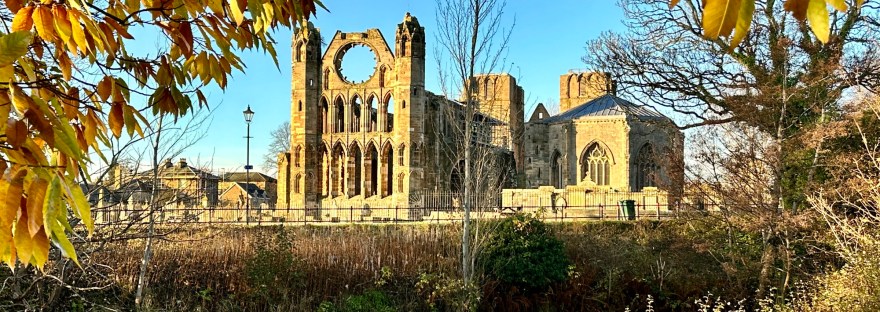
Elgin Cathedral, is also known as the Lantern of the North, dating back to the 13th century. This beautiful building was almost completely destroyed in 1390 by the Wolf of Badenoch, today the Cathedral is open for tours, or you can admire from afar. To the left of the Cathedral, you will find the opening to the Biblical Gardens which is also well worth a visit.

Carry straight on and cross the bridge over the river Lossie, from the bridge take a left and pass by the chip shop heading into Kingsmill Court. You will see a large warehouse on the left, turn left beforethe warehouse in front of you will see a fenced path that runs along the side of the river.

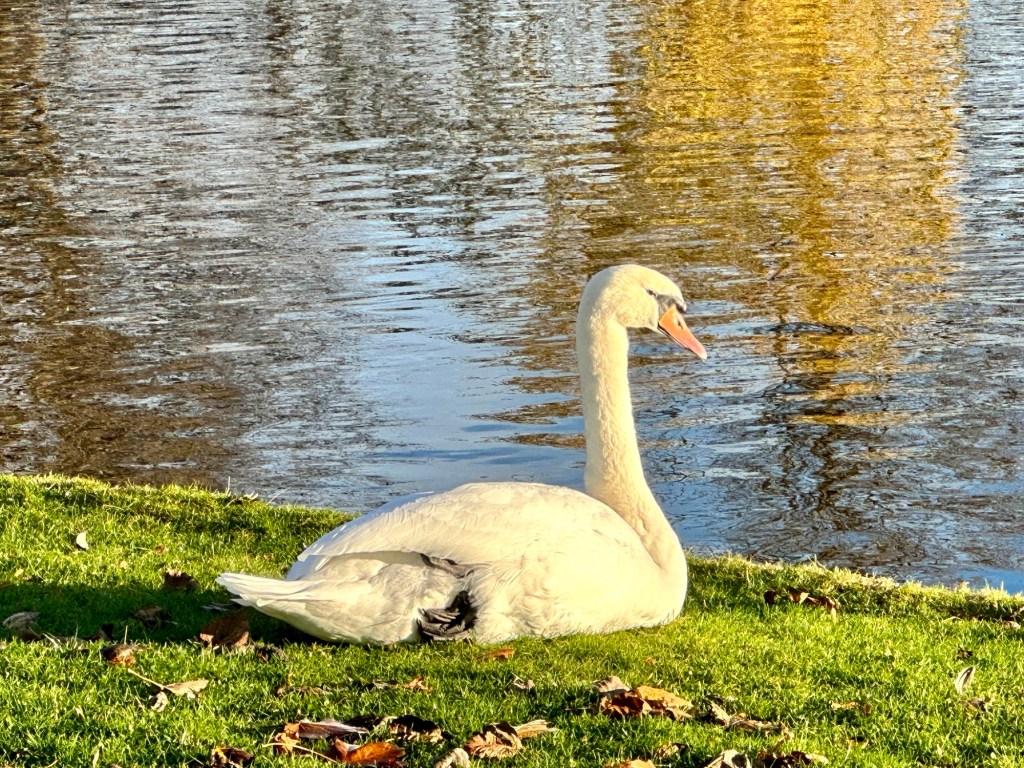
Head along this path until you come to another bridge back over the river. Keep an eye out for wildlife on the river, I saw ducks and heron along the way. Once over the bridge, turn right and follow the path around Cooper Park passing by the Cooper Park pond, there are usually plenty of swans and ducks paddling in the pond.

When you get to the junction of the A941 take the underpass and carry straight on until you pass by the sports centre. Once the path reaches the road, cross over another footbridge to your right. Once over the bridge take a left and just follow the path alongside the river.

Mansion House hotel

You will get some glimpses of the impressive Mansion House Hotel along the way. You will pass by a closed off footbridge, carry on until you come to the new one. Head over the new bridge and turn left following the path, it will turn right until you eventually come out at a road.

Duke of Gordon Monument

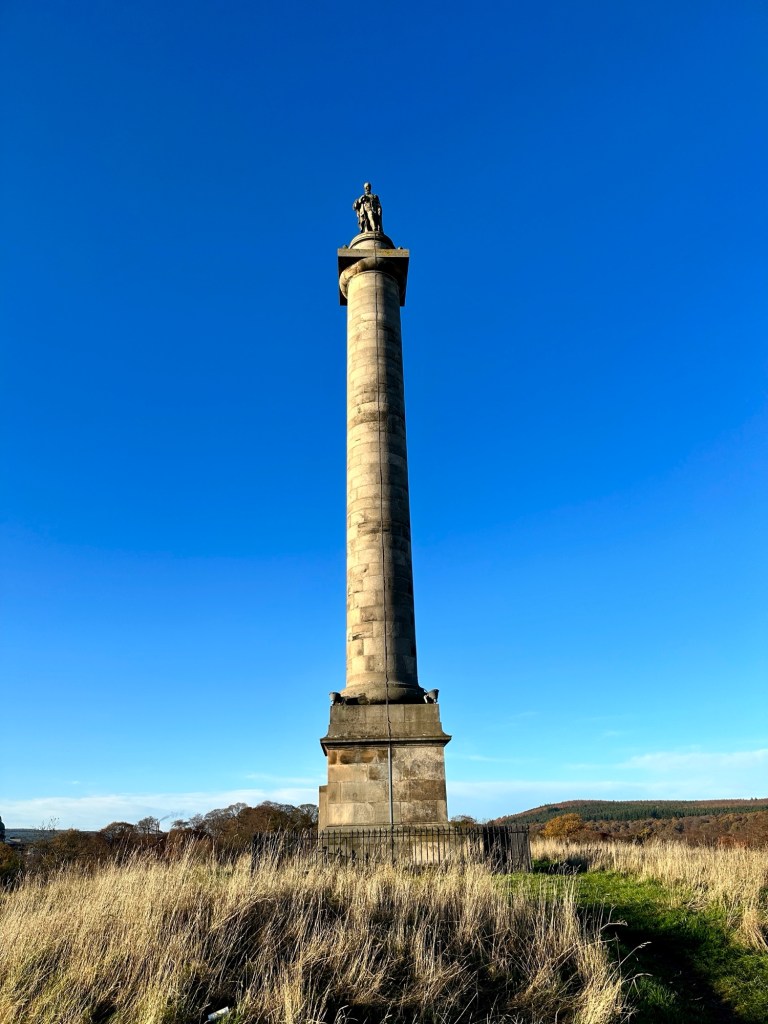
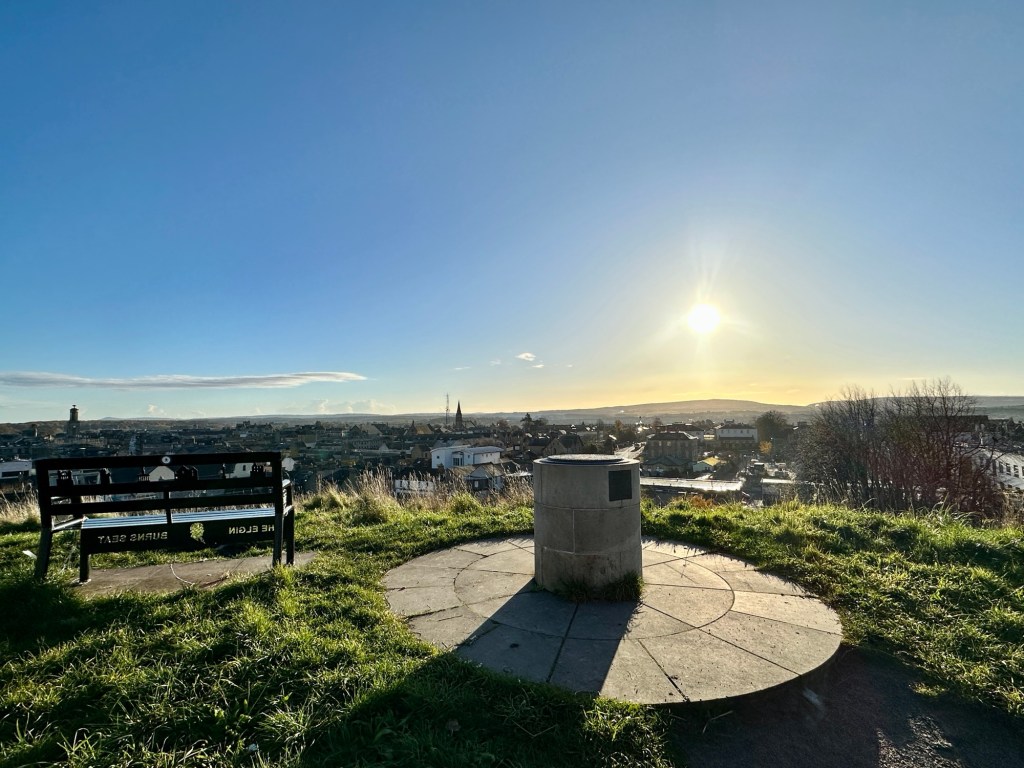
Head along Hill Street once you pass the building with the map you will find the path up Lady Hill. Take the zigzag path until you reach the monument at the top that was built to honour the 5th Duke of Gordon. Next to the monument you will find the remains of Elgin Castle, and in front of you a fantastic view across Elgin.

Elgin from Lady Hill

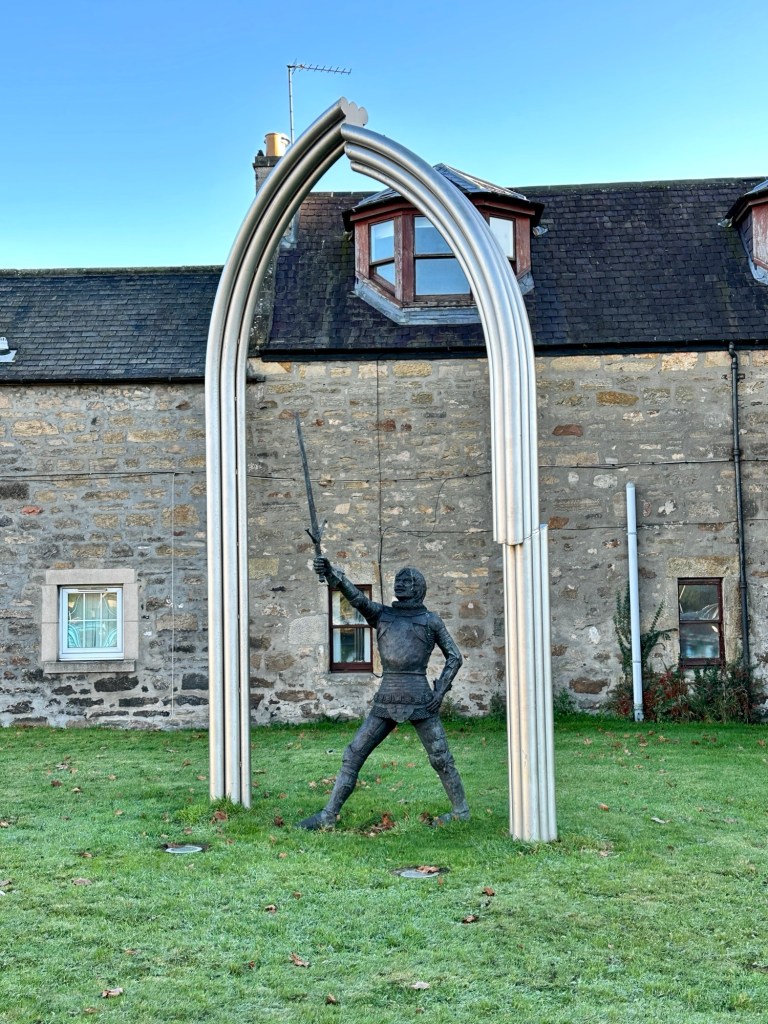
From here take the steps to your left, back down to the street, turn left and head back to the start of the walk. Just before you head along the High Street you will find a bronze statue of Alexander Stewart also known as the Wolf of Badenoch who set the Cathedral alight.

Wolf of Badenoch

Once back on the High Street it is time for a well-deserved coffee and cake!