Aberdeenshire Walks, Places to Walk

Kirk of Skulls & Coastal Circular, Gardenstown

Distance: 5 miles. Time: 2-3 hrs. Level: Easy, with some elevation. Terrain: A mixture of road, grass track, and well-maintained paths. Access: As you travel along the B9031 from Macduff, you’ll see a signpost for St John’s Church (AB45 3ES) on the left. Shortly after, you’ll find an old quarry on the right, which is the best place to park. The What3words location for the quarry is: ///townhouse.inhabited.note

Please note, there is no direct public transport to the start of this walk. However, you could take the No. 273 bus to Gardenstown and walk to the church from there, although the path may be overgrown in places.

This is a beautiful circular coastal walk with stunning views and a fascinating slice of local history. At its heart lies the atmospheric ruin of St John’s Church, better known as the Kirk of Skulls, perched dramatically above Gamrie Bay.

Start at the old quarry parking area and carefully cross the road to join the small road signposted for St John’s Church. Follow this road as it winds along past the church’s own small carpark. Although you can park here, the rough condition of the access road makes the quarry a better option.

Continue along the track beyond the carpark until you reach the ruined church and graveyard This is St John’s Church, a historic 11th-century site dedicated to St John the Evangelist. Most of the ruins visible today date from the early 1500s, with later additions in the 17th century.
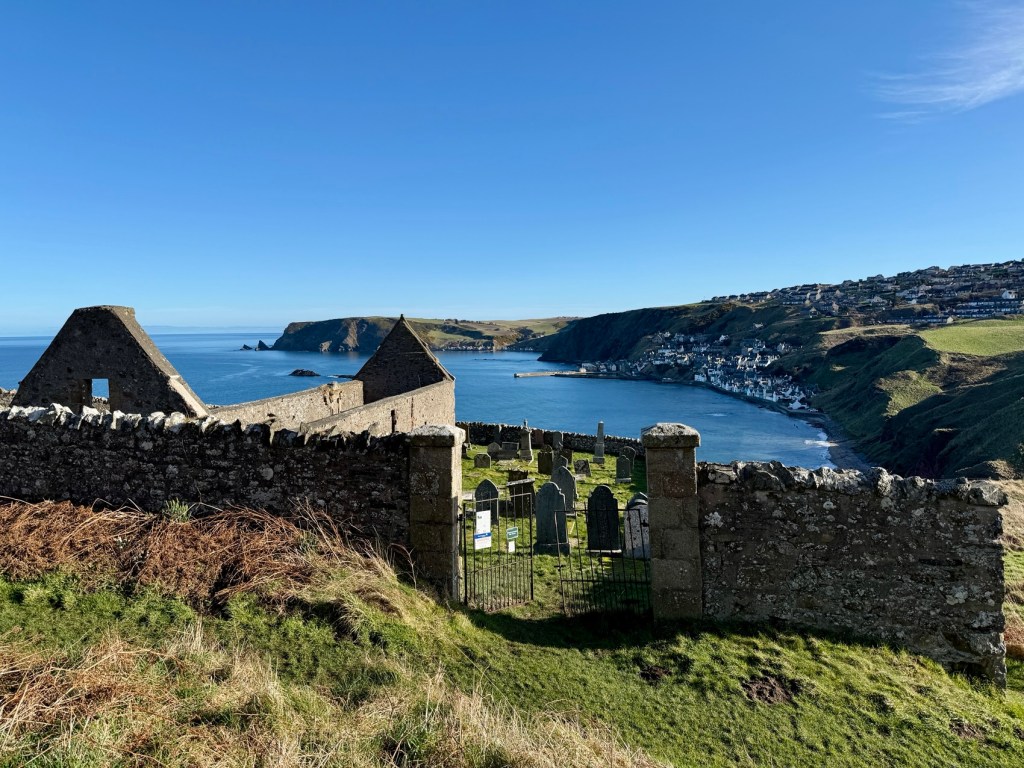
The nickname “Kirk of Skulls” comes from a dramatic local legend linked to a battle in 1004 AD, the Battle of the Bloody Pits. According to tradition, a Viking fleet sought shelter along the Banff coast during a fierce storm. Short on supplies, around 600 Vikings landed near present-day Gardenstown, hoping to raid the area. Unbeknown to them, the Thane of Buchan had anticipated an attack and assembled a strong local force.

A brutal battle followed, ending in the Vikings’ defeat. The heads of three Viking leaders were said to have been displayed within the church until the 19th century, a gruesome detail that inspired the church’s eerie nickname.

After exploring the ruins, continue a short way beyond to a bench with a panoramic view of Gardenstown, locally known as Gamrie. Retrace your steps slightly to the map board, then head up the well-maintained footpath. There is a steady climb here as you make your way inland.
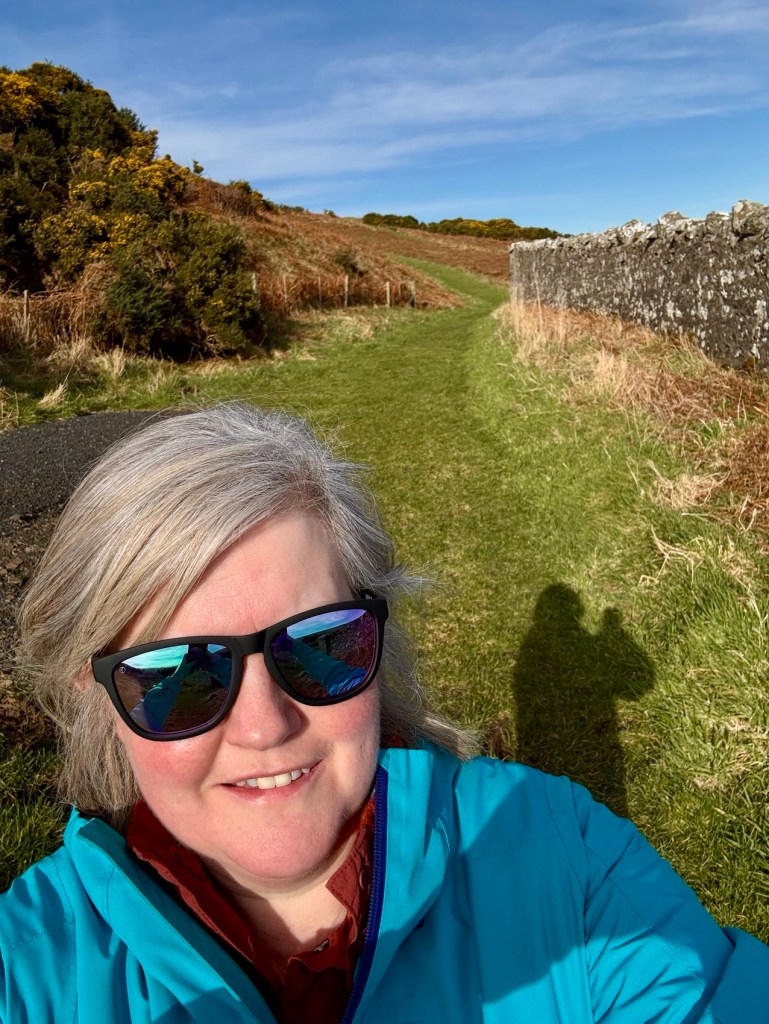
At a junction, take the left-hand path. After passing a farm, continue on the right-hand path, which leads past a row of wind turbines.

Once you reach the coastline, pause to soak in the spectacular views across the Moray Firth. Turn right here to follow the coast back toward Gardenstown, with views of Crovie appearing along this stretch.

Eventually, the path swings back inland. Before you reach the previous junction, take the left turn which leads you back down toward the church. From there, simply follow the road back to the quarry, where your walk ends.

This circular route offers a rich mix of history, coastal beauty, and peaceful rural scenery. It’s an ideal walk for a sunny morning or afternoon, just be sure to bring sturdy footwear and a camera for those views.

Moray Walks, Places to Walk

Linn Falls Circuit Aberlour

Distance: 2 miles Time: 1hr Level: Easy Terrain: Sections of pavements and road, along with a section of forest path and track. Some steps and rough ground. Access: Arrive by car or public transport. Stagecoach No 36 bus runs between Elgin and Aberlour at regular intervals throughout the day. Car parking available at Alice Littler Memorial Park AB38

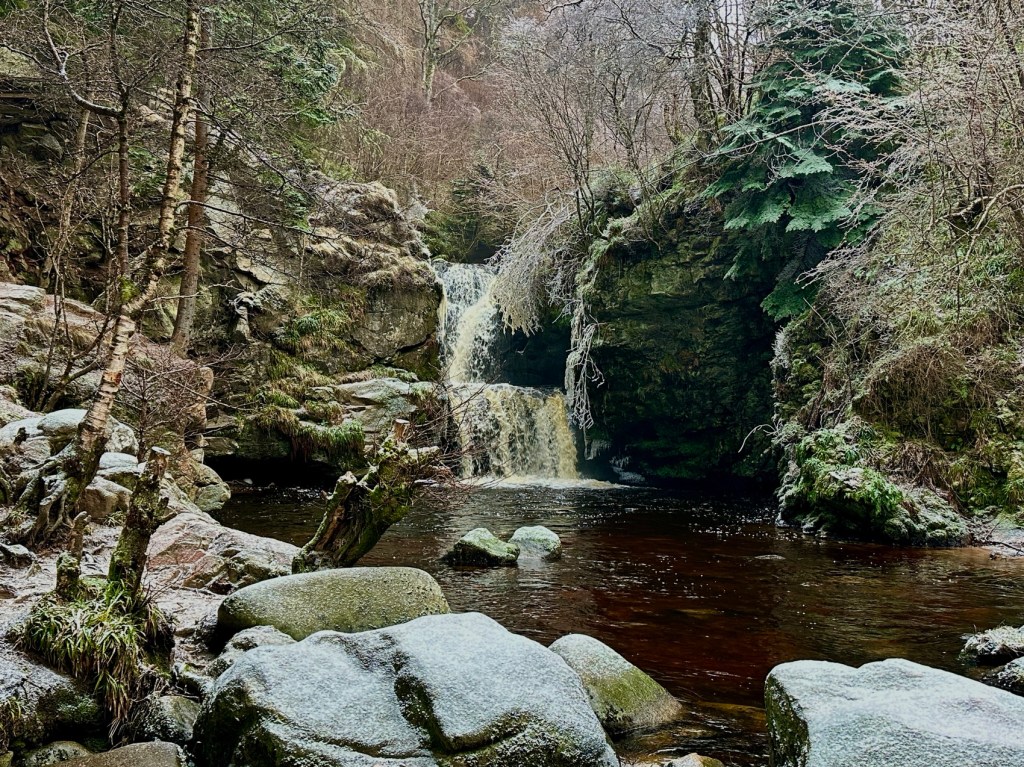
This short but beautiful circular route is based around Aberlour in the heart of Speyside. The walk takes you out of the town and into the woods. Following the woodland path, you will come to the stunning Linn Falls (Linn of Ruthrie waterfalls). On your return to the town, you will pass by the Aberlour Distillery before finding the hidden packhorse bridge.

Starting from the carpark. To the right of the play park, you will see the bridge with the path over it. Walk over the bridge and past the back of the old train station, heading towards the church. It is worth taking a look round the front of the station. There has not been a train here since the line east to Dufftown closed in 1971 but the station still looks amazing over fifty years on.

Back at the Church, go towards the square, cross over the main road and pass the Co-op on your left-hand side and head up Queen’s Road. Once past the Fleming Hospital on your right, you will see a sign for Glenallachie and Fairy Knowe. Follow the narrow path up on to the road turning right. Just past the street of houses, take the narrow road to the back of sheds. It is signposted to the falls.

At the end of the tarred, narrow road, you will come to a gate, pass through the gate and on to a woodland path. Stay on the main path, ignoring any paths that branch off. The main path will curve to the right, and you will descend steps with a handrail and soon see the beautiful double-cascading waterfall.

The area beside the waterfall is a popular wild dooking spot in the summer months and there is a great wee area where you can relax and have a picnic. There was snow covering when we visited so dooking and picnics was not an option.

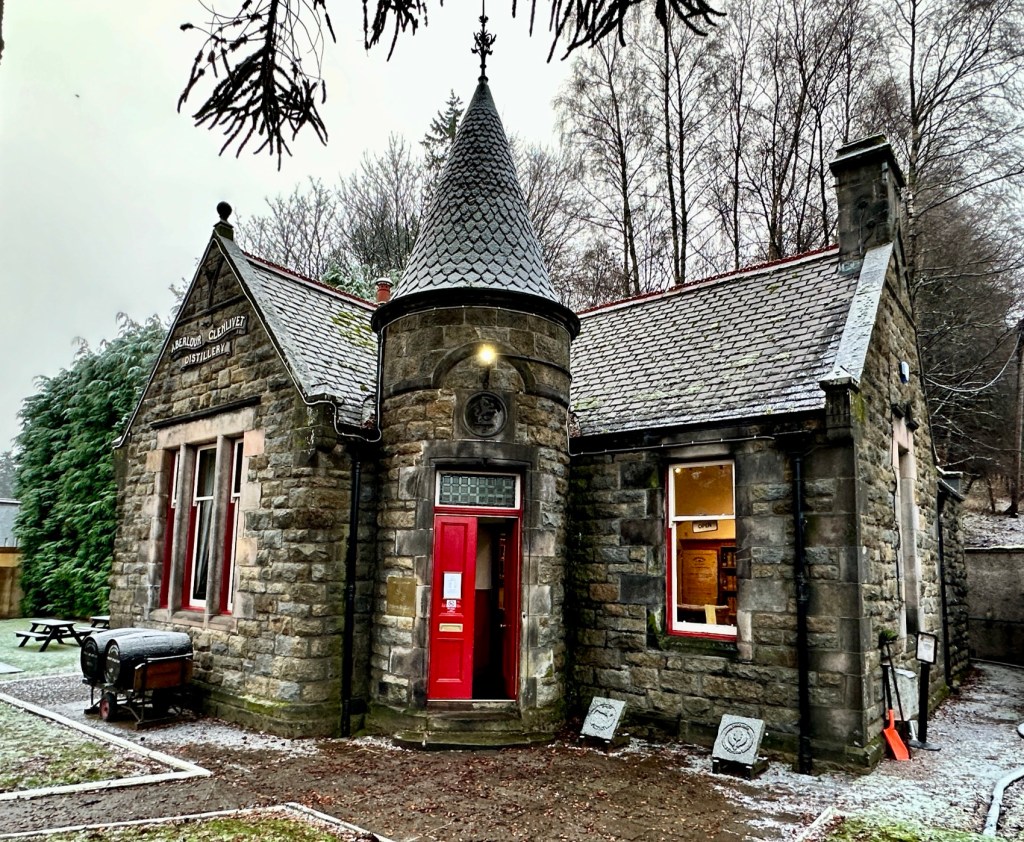
Once you have explored the falls, follow the Burn of Aberlour round to the right and after a short walk you will pass Aberlour Distillery on your left which was founded in 1879 by James Fleming. Fleming left a lasting legacy in Aberlour building the Fleming Hall and then the Fleming Hospital. When you reach the main road, you can take a closer look at the distillery if you take the footbridge on your left.

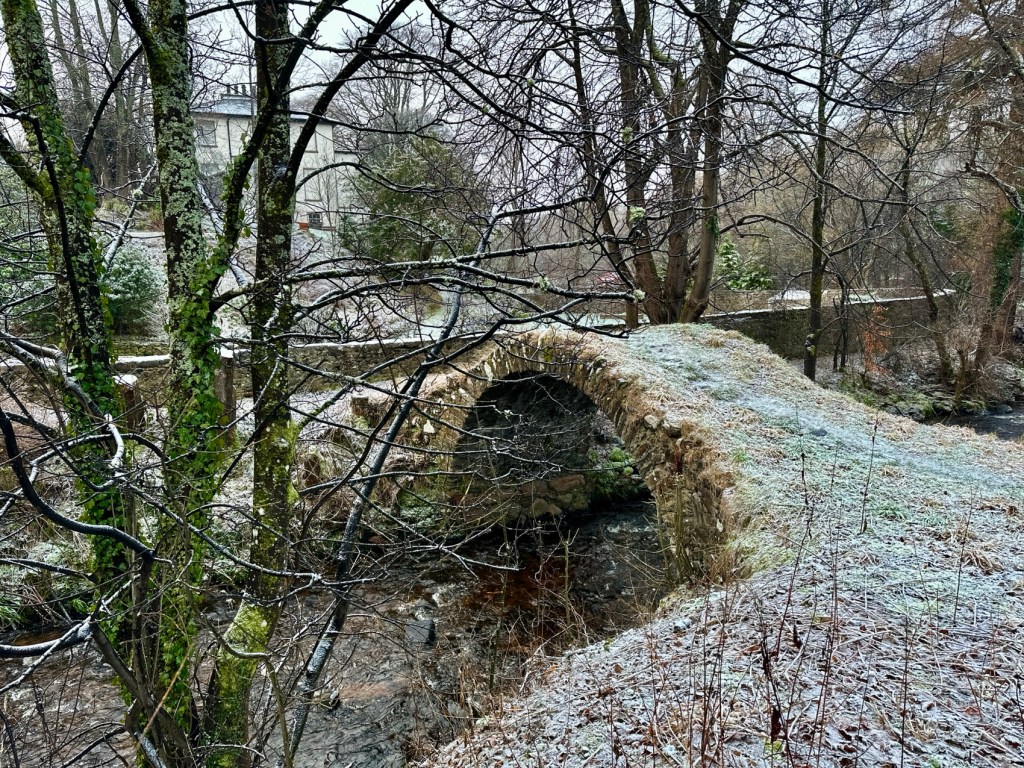
Here you will cross over the main road, be careful of traffic as this road can be busy. Once safely across, look over the bridge and nestled in the undergrowth there is a small, old packhorse bridge that was built around 1624.

Take the path to the right-hand side of the packhorse bridge which will lead you back to the car park. Just before you finish your walk take a look down at the Victoria Bridge which is a suspension footbridge that was built in 1902 to replace a ferry that was previously in service. The bridge was also funded by James Fleming and initially cost a penny toll to cross hence it is often known as the Penny Bridge.

From here you go back to the carpark and the end of your walk.

Moray Walks, New Walk, Places to Walk

Walk to the Jean Carr’s Stone

This is a interesting and possible slighty creepy place to visit near Fochabers! Details of the stone below is from the information board at the stone!

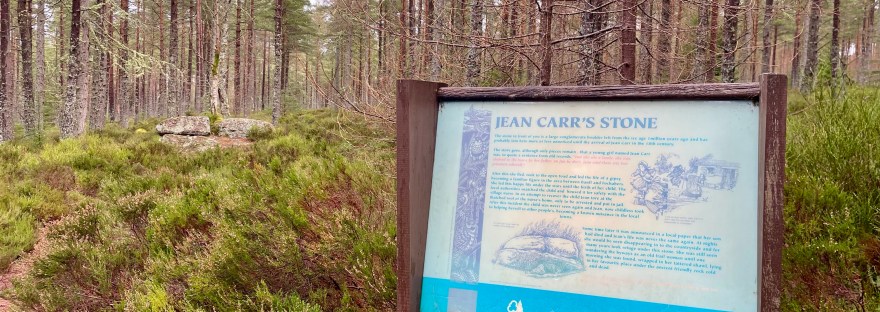
Information board surrounded by trees with stone in the distance
Jean Carr stone information board.

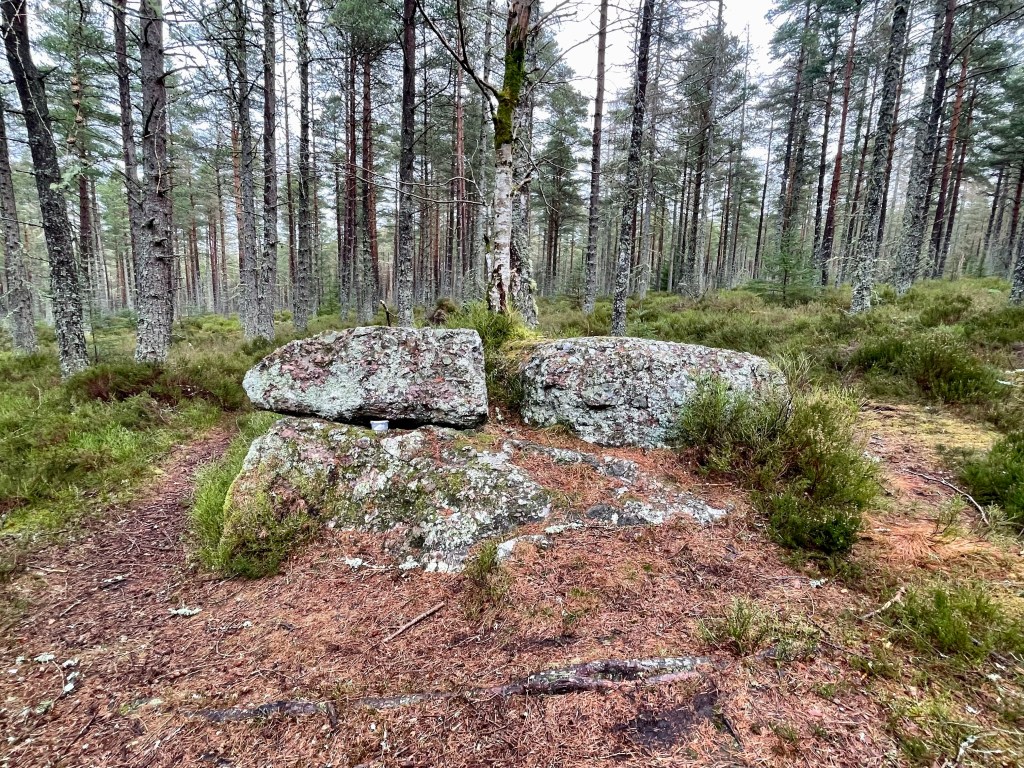
The stone is a large conglomerate boulder left from the ice age I million years ago and has probably lain here more or less unnoticed until the arrival of Jean Carr in the 18th century.

The story goes, although only pieces remain, that a young girl named Jean Carr was, to quote a sentence from old records, “Fan she wis a lassie, she was chained in the hoose by her father, an fan he dee’t, Jean said there wis two prisoners relieved.”

After this she fled, took to the open road and led the life of a gypsy, becoming a familiar figure in the area between Banff and Fochabers.

She led this happy life under the stars until the birth of her child. The local authorities snatched the child and housed it for safety with the village nurse. In an attempt to recover the child Jean tore at the thatched roof of the nurse’s home, only to be arrested and put in jail. After this incident the child was never seen again and Jean, now childless took to helping herself to other people’s, becoming a known nuisance in the local towns. At night Jean would seek the shelter of the great rock.

Large stone surrounded by trees
Jean Carr stone

“Lock up your bairns, Jean Carr’s in toon!” was the cry when she descended on Fochabers!

Some time later it was announced in a local paper that her son had died and Jean’s life was never the same again. At nights she would be seen disappearing in to the countryside and for many years took refuge under this stone. She was still seen wandering the byways as an old frail woman until one morning she was found, wrapped in her tattered shawl, lying in her favourite place under the ancient friendly rock cold and dead.

Distance: 2 1/4 miles Time: 1-1 1/2hrs Level: Easy with elevation Terrain: Forrest road and woodland track. Access: From Fochabers turn left at the chipshop and keep going out of town for approx 1 1/2miles. Just before you come to the Earthpillars car park on the right take the track on the left. Drive up past the opening to the house on the right till you come to a small carpark and gate into the Ordiequish woods. Click for google map link!

Route: Leaving the carpark head through the gate and start your walk on the forestry road. Just over half a mile in the road will take a turn to the left and shortly after you will come to a junction take a left here.

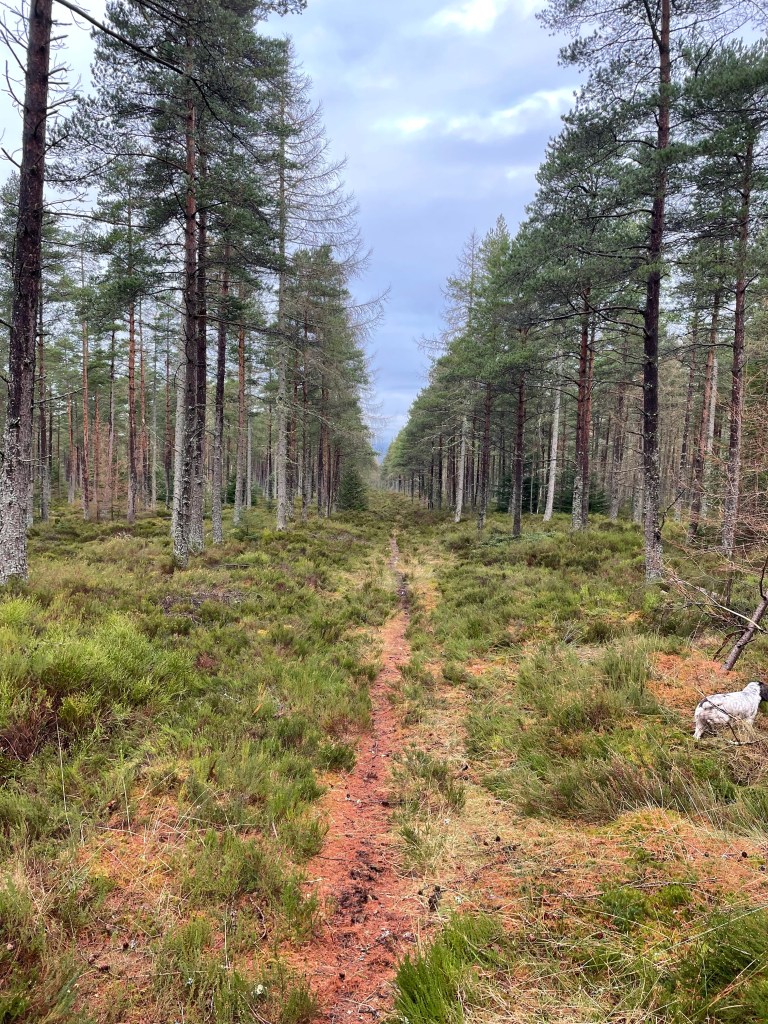
Wood track with trees at each side with dog running

The road will ascend straight uphill at around a mile you will pass two openings at the right before you will see an opening to the left and a narrow path. Take this path and you will soon see the information board and the stone. It’s hard to believe Jean would hike away up here but we all have that one place we love to visit!

Small path surrounded by trees
Path to the stone

Return by retracing your steps back to the carpark. There is a circuit but due to recent storms I decided that it was best not to carry on in case of falling trees.

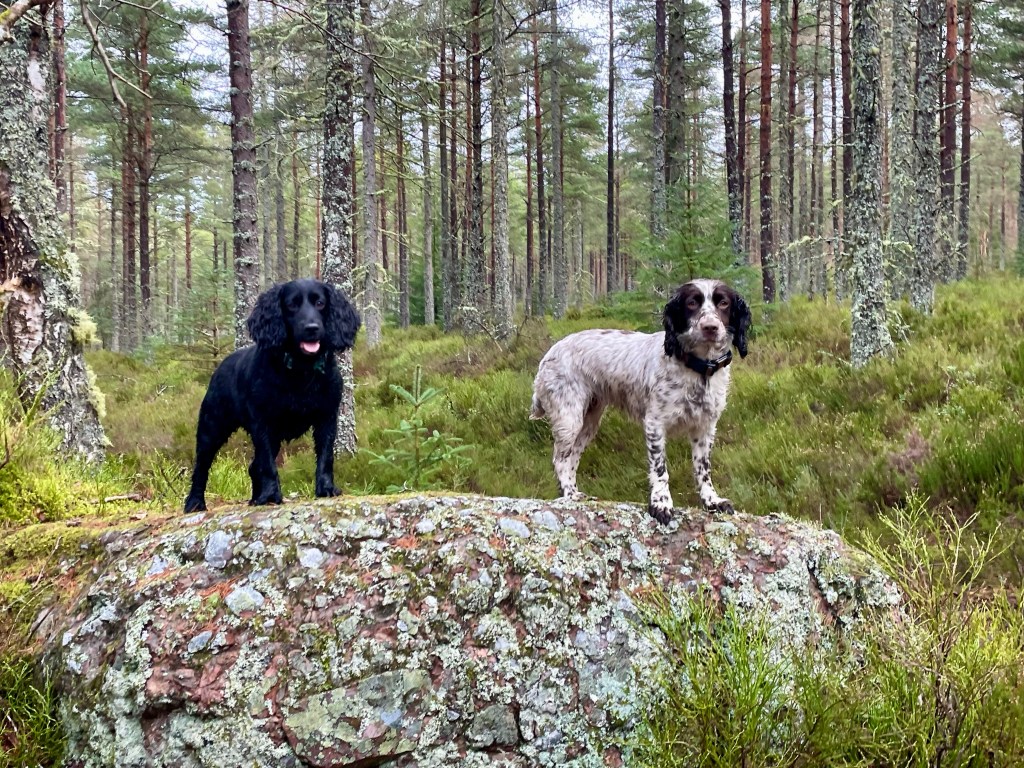
1 black cocker spaniel and 1 brown and white cocker spaniel standing on top of stone surrounded by trees
Dixy and Suzi