Aberdeenshire Walks, Places to Walk

Kirk of Skulls & Coastal Circular, Gardenstown

Distance: 5 miles. Time: 2-3 hrs. Level: Easy, with some elevation. Terrain: A mixture of road, grass track, and well-maintained paths. Access: As you travel along the B9031 from Macduff, you’ll see a signpost for St John’s Church (AB45 3ES) on the left. Shortly after, you’ll find an old quarry on the right, which is the best place to park. The What3words location for the quarry is: ///townhouse.inhabited.note

Please note, there is no direct public transport to the start of this walk. However, you could take the No. 273 bus to Gardenstown and walk to the church from there, although the path may be overgrown in places.

This is a beautiful circular coastal walk with stunning views and a fascinating slice of local history. At its heart lies the atmospheric ruin of St John’s Church, better known as the Kirk of Skulls, perched dramatically above Gamrie Bay.

Start at the old quarry parking area and carefully cross the road to join the small road signposted for St John’s Church. Follow this road as it winds along past the church’s own small carpark. Although you can park here, the rough condition of the access road makes the quarry a better option.

Continue along the track beyond the carpark until you reach the ruined church and graveyard This is St John’s Church, a historic 11th-century site dedicated to St John the Evangelist. Most of the ruins visible today date from the early 1500s, with later additions in the 17th century.
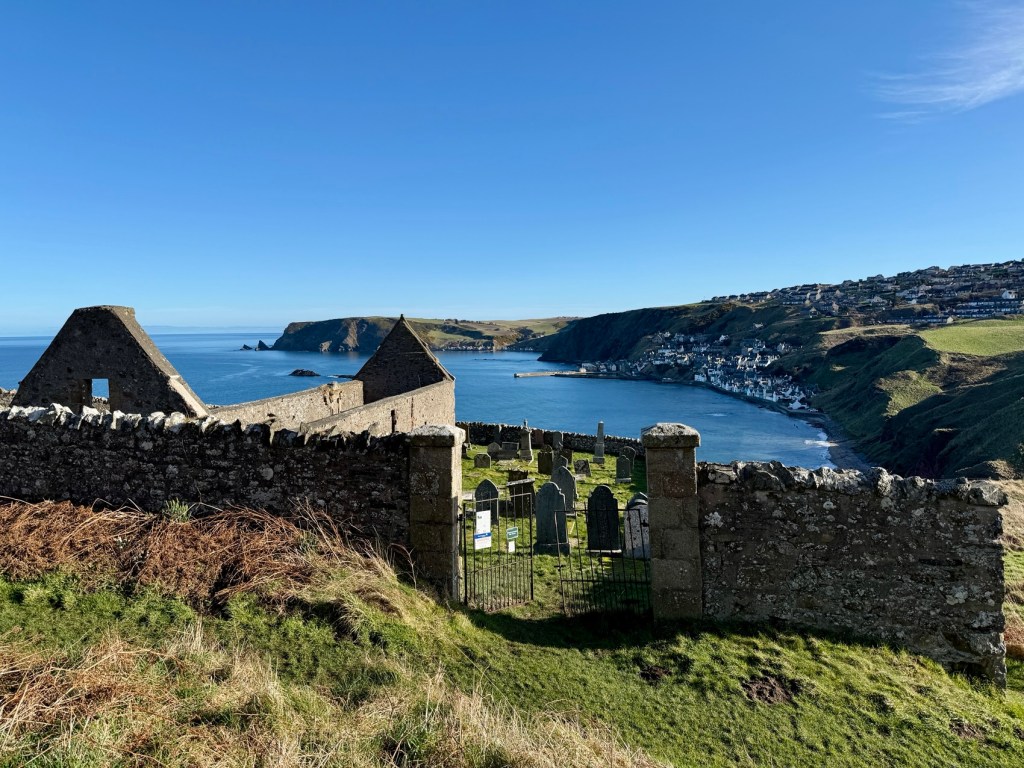
The nickname “Kirk of Skulls” comes from a dramatic local legend linked to a battle in 1004 AD, the Battle of the Bloody Pits. According to tradition, a Viking fleet sought shelter along the Banff coast during a fierce storm. Short on supplies, around 600 Vikings landed near present-day Gardenstown, hoping to raid the area. Unbeknown to them, the Thane of Buchan had anticipated an attack and assembled a strong local force.

A brutal battle followed, ending in the Vikings’ defeat. The heads of three Viking leaders were said to have been displayed within the church until the 19th century, a gruesome detail that inspired the church’s eerie nickname.

After exploring the ruins, continue a short way beyond to a bench with a panoramic view of Gardenstown, locally known as Gamrie. Retrace your steps slightly to the map board, then head up the well-maintained footpath. There is a steady climb here as you make your way inland.
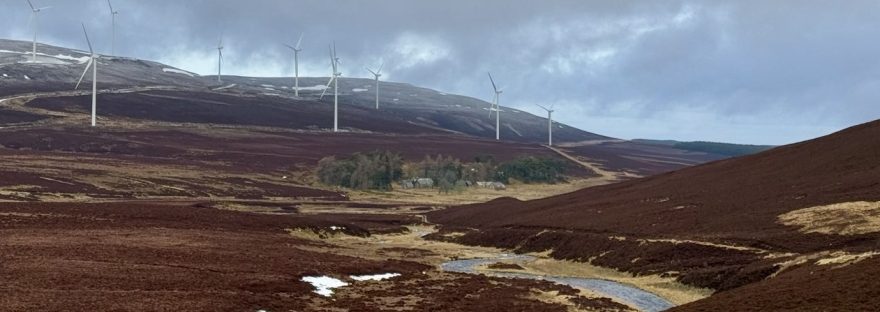
At a junction, take the left-hand path. After passing a farm, continue on the right-hand path, which leads past a row of wind turbines.

Once you reach the coastline, pause to soak in the spectacular views across the Moray Firth. Turn right here to follow the coast back toward Gardenstown, with views of Crovie appearing along this stretch.

Eventually, the path swings back inland. Before you reach the previous junction, take the left turn which leads you back down toward the church. From there, simply follow the road back to the quarry, where your walk ends.

This circular route offers a rich mix of history, coastal beauty, and peaceful rural scenery. It’s an ideal walk for a sunny morning or afternoon, just be sure to bring sturdy footwear and a camera for those views.
Moray Walks, Places to Walk

Explore Black Water Lodge and Dead Wife’s Hillock Hike

Distance: 7 1/2 miles Time 3 – 4 hrs Level: Moderate with elevation. Terrain: Grass track and Landrover tracks. Car parking is available at The Steplar car park (AB54 4HY). Google Maps will take you to the correct location. There is no public transport to the car park. The area is part of the Dorenell Wind Farm. Only a few miles along the road you will find the Dorenell Visitors Centre at AB54 4EL. Here you will find a public toilet and lots of information about the trails in the area. 


This is a fantastic walk in the beautiful and remote Cabrach, located between Dufftown and Rhynie. Cabrach is known for its rugged landscape and remoteness. It has to be one of my favourite places to escape for an adventure. With a mix of wildlife, history and amazing views it really is an epic place to visit. 


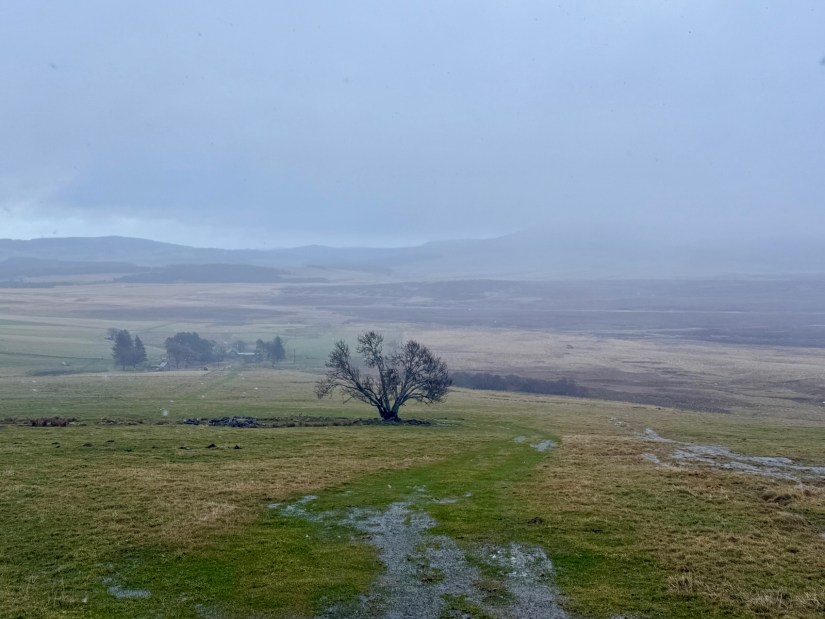
At the start of the walk, there is an information board with the wildlife you may spot along the way as well as a map. From the car park, go through the gate and head up the grass track toward the solitary tree visible on the hill. Once you reach the tree, go through the gate and continue onto the Land Rover track. Don’t forget to look back!

The climb up Dead Wife’s Hillock is steep but worth it as you will get 360 degree views on a clear day. The hill’s eerie name is said to come from a story of a woman who perished there in the late 17th century during a famine. She died of starvation and was found with a child still alive, attached to her breast.

As I walked up the hill, I spotted a herd of deer on the left side. I didn’t see any more up close. It was a quiet day in the sky for birds, but golden eagles have been spotted in this area.

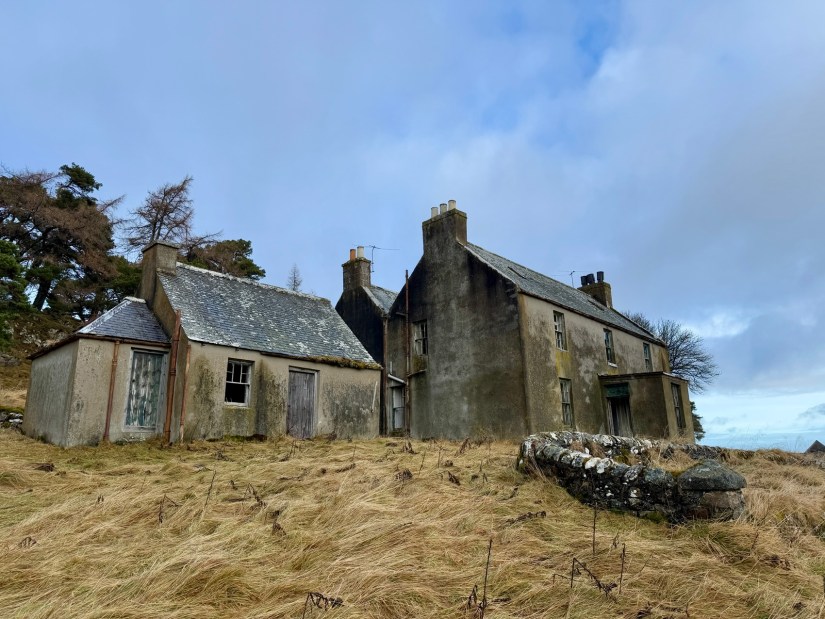
Once you reach the highest point of the hill, the descent will be a welcome relief. Soon, the Black Water River will come into view. Not far from the river, you will reach a way marker post—take the track to the right. This track follows the river. After a short distance, you will see Blackwater Lodge on the opposite side of the river.


As you approach the lodge, you will come to a fork in the track. Take the right track here—the left track leads to a ford, which cannot be crossed when the river is in spate. After a short distance you will reach a footbridge, cross it to reach Blackwater Lodge.

The lodge was a former seasonal hunting lodge, left unoccupied since the 1960s. Dating back to the late 18th century, it was used by the Duke of Richmond and Gordon. Please be respectful—only look through the windows and do not enter the property.

To the left of the lodge there is a small waterfall, a hidden gem that is worth taking a look. There are plenty areas to sit down and have a picnic and enjoy the peace. 


Once you have finished exploring, retrace your steps back over the bridge and along the track that runs parallel with the river.  At the way marker post, take a left to return over Dead Wife’s Hillock and back to The Steplar car park.

Aberdeenshire Walks, Places to Walk

Banff and Whitehills Circular

Distance: 5 ½ – 6 miles Time: 2 – 3 hrs Level: Easy with some elevation Terrain: Mix of pavement, track, road, and beach Access: Car parking is available at the Quayside car park (AB45 1HQ). Regular buses run between Elgin and Aberdeen, with the nearest bus stop located at Chalmers Hospital, just a short distance from the start of the walk.

This is a wonderful coastal walk from the Aberdeenshire town of Banff to the neighbouring village of Whitehills. Before setting off, check the tidal times so you can enjoy walking along the beach.

From the Quayside car park, head towards the beach, taking the coastal path along Scotstown. Watch for cormorants drying their feathers on the rocks, and you may even be lucky enough to spot dolphins passing by.

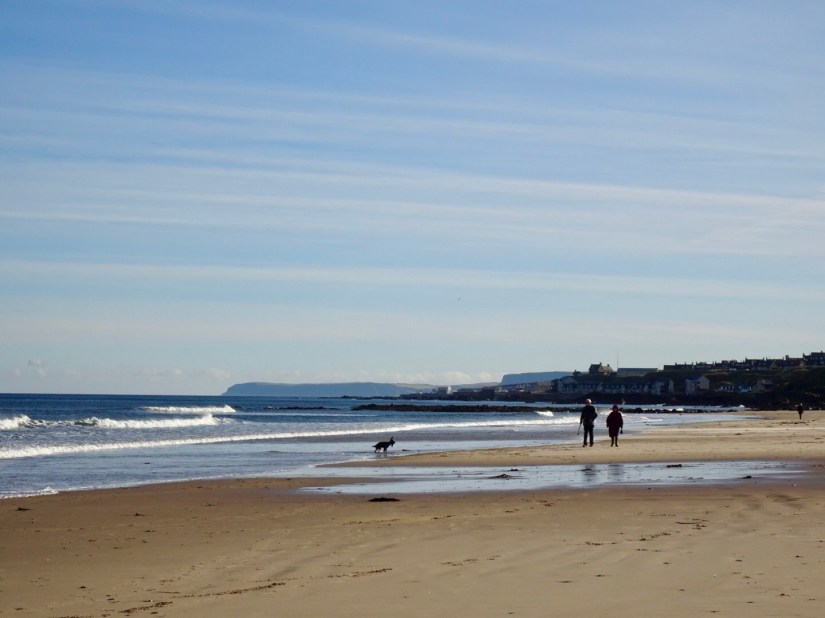
Soon, you’ll come to steps leading down to the beach if you’ve timed the tide right. Banff Links is a fantastic beach to walk along, and on a sunny day, it’s lovely to take a wee paddle as you stroll. When you reach the end of the caravan park, take the ramp on your left to return to the path.

Follow the path and go over the footbridge until you reach a fork. Take a right here, and shortly you’ll arrive at Blackpots Playpark and Harbour.

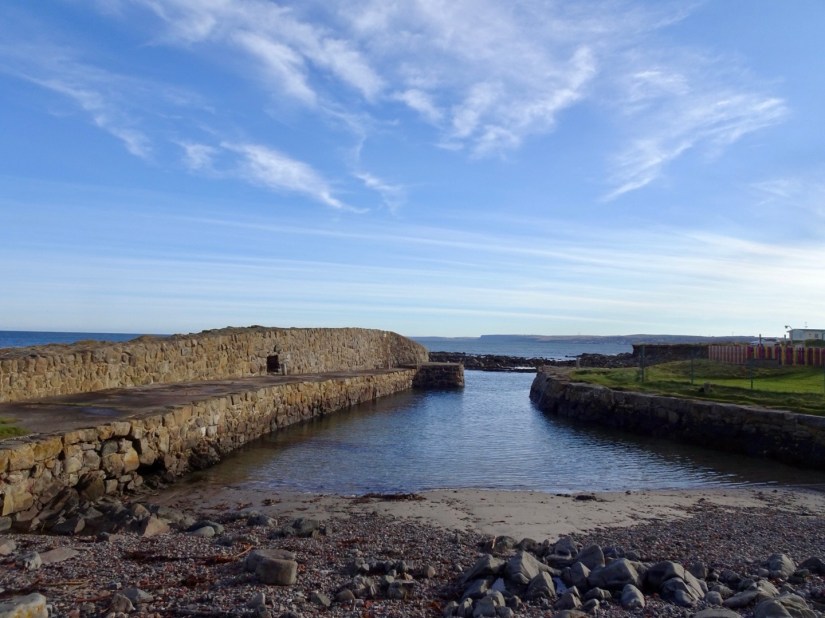
The small, disused harbour was built in the late 18th century. The playpark was a favourite spot for my kids when they were younger, and I have fond memories of enjoying fish and chips with my mum while the kids played. fter the playpark, you’ll come upon the Fisherman’s & Seafarers’ Memorial and Whitehills Marina.

Continue along the road, passing Downies Fish, and keep an eye out for the “Light the North” lighthouse.

Stay on Seafield Street until you reach the post box and telephone box then take a left along Loch Street. Continue on Loch Street until you leave Whitehills. Soon, you’ll come to the coastal path on the left, take this path back towards Banff.

Along the coastal path, you’ll find the Red Well. The name comes from a spring that emerges from the ground, leaving red deposits, possibly due to iron content. The nearby beehive-shaped structure is thought to have been built by the Romans.

After the Red Well, continue on the path until you reach a fork just before the footbridge. Take the fork to the right and follow the track to a junction. Take a left here, follow the road over the bridge, and continue until the road splits.

Take the road on your right, which will lead to the Banff Links car park. Turn right and walk through the car park. At the other end, you’ll find a path with a gate. Go past the gate and continue along the path. After the third blue pavilion, you’ll come to another fork; take the track to the left, passing a small stone building (possibly an old icehouse).

Stay on this path as it winds through Scotstown. You’ll pass behind a row of houses; at the end of these, you’ll see some sheds. Take a left here to return to the Quayside car park.

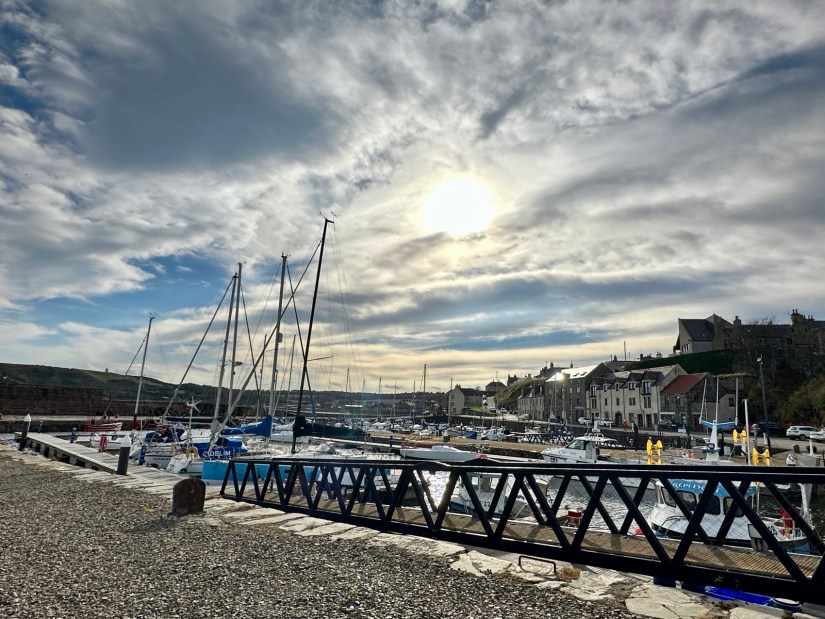
Next to the car park, you’ll find the recently upgraded Banff Harbour, which is worth a visit before finishing your walk. You’ll enjoy lovely views of Macduff from the harbour.